The authentic and timeless world of Ralph Lauren
January 2026
RL/Culture

A Classic Cool Connection

One writer reflects on what he’s learned about dressing from the men of Milan, who mix tonality and a more somber color palette with subtle flashes of personal expression—a move long championed by Ralph Lauren himself.
By Eric Twardzik
There is a quiet elegance to the way Milanese men dress, a quality that was all the more evident during my first visit to the city due to its contrast with my own kit. It was 2016, and I’d flown into Milan as a hanger-on to my younger brother, a furniture designer who hoped to make connections at that year’s Salone del Mobile, the annual design fair held each April. Still in my 20s and having recently viewed The Talented Mr. Ripley for the first time, I packed for the trip the way I imagined a wayward American college graduate circa 1958 might have: flat-front chinos, frayed oxford shirts, a navy knit tie, and a patchwork madras blazer to finish it all off. Not a bad look—and one I continue to sport in warm weather today—but while nursing a Negroni Sbagliato the size of a fishbowl outside Bar Basso or waiting in line for a linen-covered table at Trattoria Milanese, I took notice of how the locals dressed, young and old.
The mid-century collegiate style demonstrated by Matt Damon in The Talented Mr. Ripley was an influence on the author's own packing job.
I did not see the pops of color I’d become so familiar with as an adherent to American preppy style, but rather careful compositions painted in neutrals: inky navy or soft grey tailoring and outerwear, powder blue shirts, cotton trousers or jeans in that perfect off-white shade, and brown suede loafers or lace-ups that quietly contributed another layer of texture to the mix. Whether the men were in suit and tie or sporting chambray shirts with ivory jeans, the cool color palette seemed a reflection of Milan itself, rooted to the past with its Romanesque churches and Renaissance fortresses yet confidently modern and urbane in its fashion and design influence and untold streetside cafés. As unique as it is to the city, it’s a sensibility also shared by Polo, which is emphasized in the design of its latest Winter collection inspired by the Alpine Italian resort town—and present Winter Olympics host—of Cortina.

“There is something about Milan that touches me—the romance of winding cobbled streets, the rich patina of ancient façades and wrought iron balconies, the mystery of hidden courtyards and small cafés, the sound of bells marking the time of day, and a way of living that moves at a slightly slower, more personal pace.”

Ralph Lauren Signature

Get The Look

WINTER STYLE NOTES: TONAL DRESS

Milanese men have long known the secret to great style is tone-on-tone dressing. Read Now
Was this Milanese uniform something learned, I thought as someone desperate to imitate it myself, or was there something in the Campari?
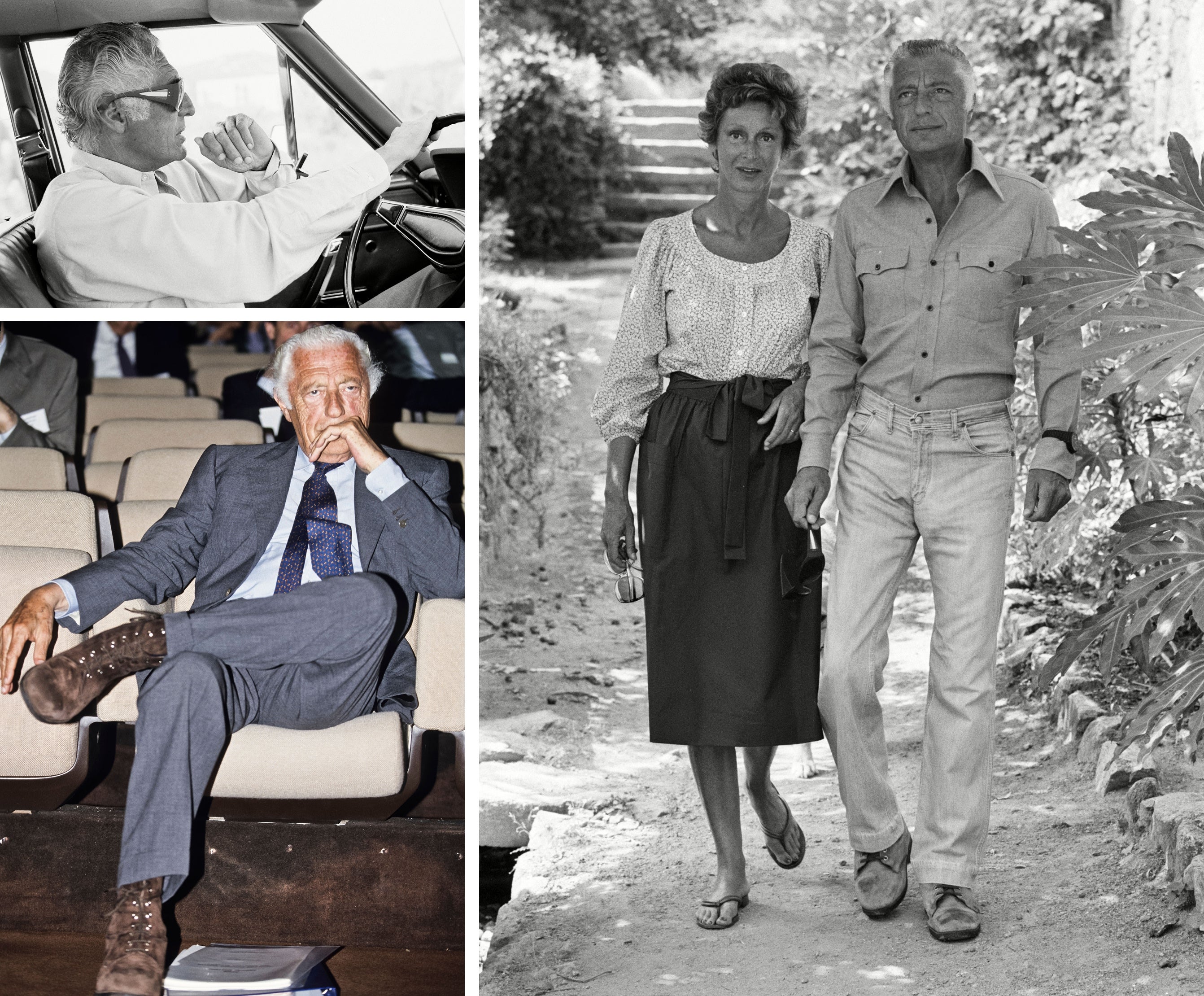
Was this Milanese uniform something learned, I thought as someone desperate to imitate it myself, or was there something in the Campari? While this hypothetical query wasn’t met with an answer, I had no trouble pinpointing the aesthetic’s patron saint: Gianni Agnelli. Immediately identifiable to anyone who’s spent time browsing menswear blogs or mining Instagram pages dedicated to vintage style icons, Agnelli—excellently nicknamed L'Avvocato (“The Lawyer”)—was the scion of an Italian industrialist family and Fiat’s principal shareholder. As the richest man in Italian history, he had little to prove and looked both powerful and at ease in his uniform of double-breasted grey or blue suits, often worn with a light blue shirt and a tonal tie. Such sobriety did not make him immune to style quirks, and his subtle deviations included wearing watches over his shirt cuffs (possibly due to metal allergies), and pairing hiking boots with tailoring (reportedly to stabilize his foot after a car accident that occurred while fleeing from his girlfriend with his mistress).
Gianni Agnelli's elegant but idiosyncratic personal style remains an inspiration today.
Whether these deviations were necessitates or indulgences, they helped Agnelli exude that most Italian of all concepts, sprezzatura, or “studied carelessness.” By layering cool, neutral tones, the Milanese have a permission slip to break the mold wherever they see fit. I noticed this many years later, after boarding a flight from Milan to Rome at the tail end of a work trip to Northern Italy. The small jet that left Malpensa Airport was a study in Milanese style, stocked with businessmen in their dark suits or the casual alternative of a navy cashmere sweater with white cotton trousers. There was an almost uniform sobriety to the cabin, until I looked closer at those seated around me and noticed strands of colorful beads stacked below a chalk-stripe sleeve, a fringe-trimmed lightweight scarf draped over a crisp dress shirt with perfect abandon, or a bare ankle rising above a polished black cap-toe. All told, the flight lasted a little more than an hour. But I was glad for my extra time in the company of the incomparably stylish Milanese, with fresh style lessons to take home with me.

Eric Twardzik is a writer with a deep reverence for things that get better with age, from tweed jackets to single-malt Scotch. He has contributed to titles including GQ, Esquire, and Condé Nast Traveler and serves as deputy editor of Wm Brown magazine. He lives in New England with his family and owns too many ties.