The authentic and timeless world of Ralph Lauren
June 2025
RL/Culture

Fine and Dandy

The author of “Black Ivy” takes us inside “Superfine,” the Costume Institute’s
celebration of Black tailoring and style
By Jason Jules
I strode down Madison Avenue, weaving through streams of traffic and crowds of people, then strolled through Central Park, making my way slowly to the Metropolitan Museum of Art. The walk from the Ralph Lauren men's flagship to the museum's steps seemed the perfect way to both savor and capture the moment. Superfine: Tailoring Black Style is a big deal—particularly for the Costume Institute, for which this show will be not only its first exhibition looking at men's fashion since 2003 but also its very first focusing on Black culture. It's conceivable that, if it were set within a larger exhibition about Black fashion through the centuries, the show's central theme, the Black dandy, would occupy a very small percentage of the terrain covered. But for me that's the beauty of it. It's the show's specificity, and its unique perspective, that makes it so important and allows it to resonate with audiences far beyond the realms of the fashion world. In addition, not only would my book Black Ivy be on sale there, but—like a lot of people involved in menswear—I felt, in my own way, personally invested in Superfine.
BY THE BOOK
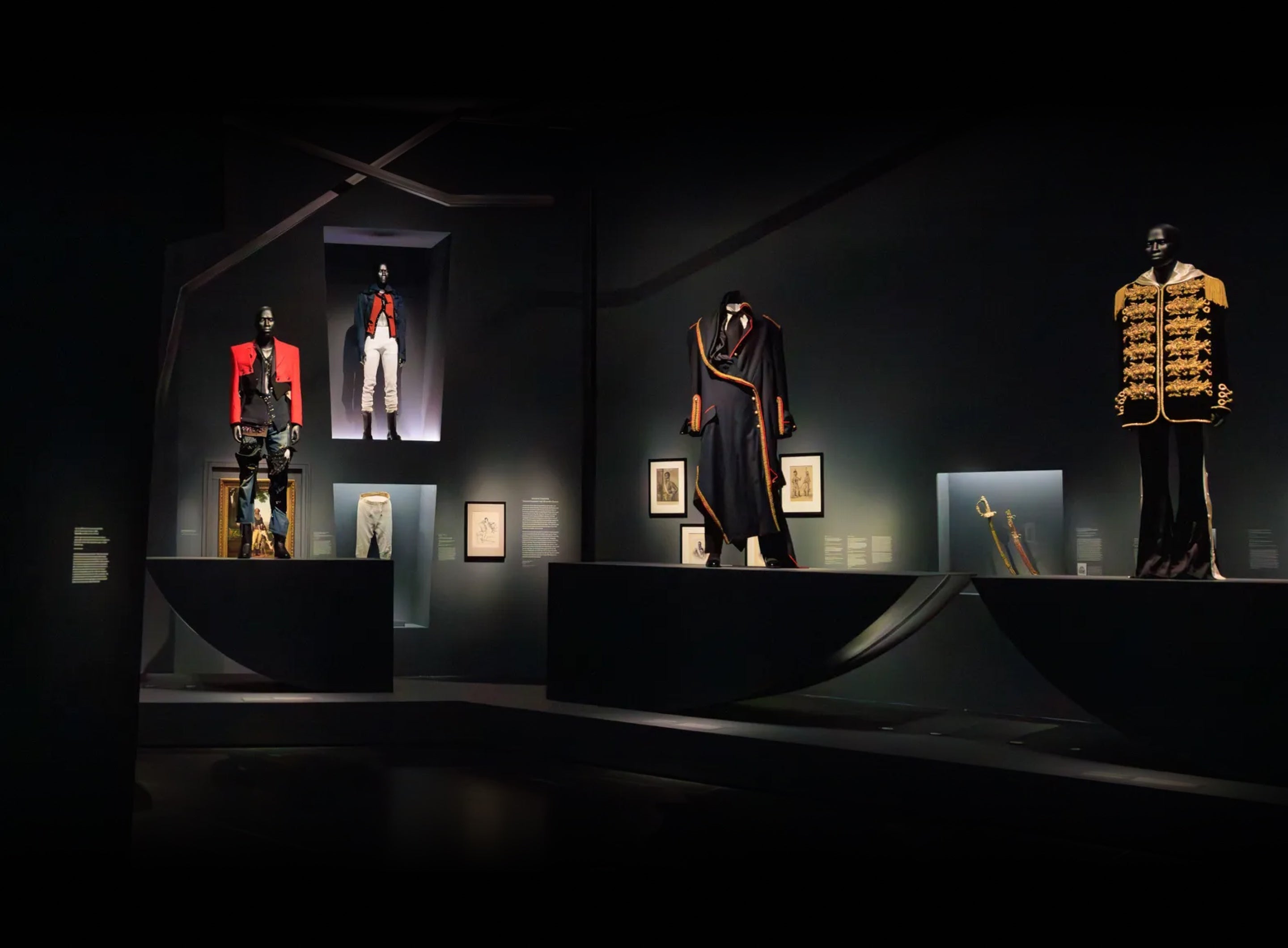
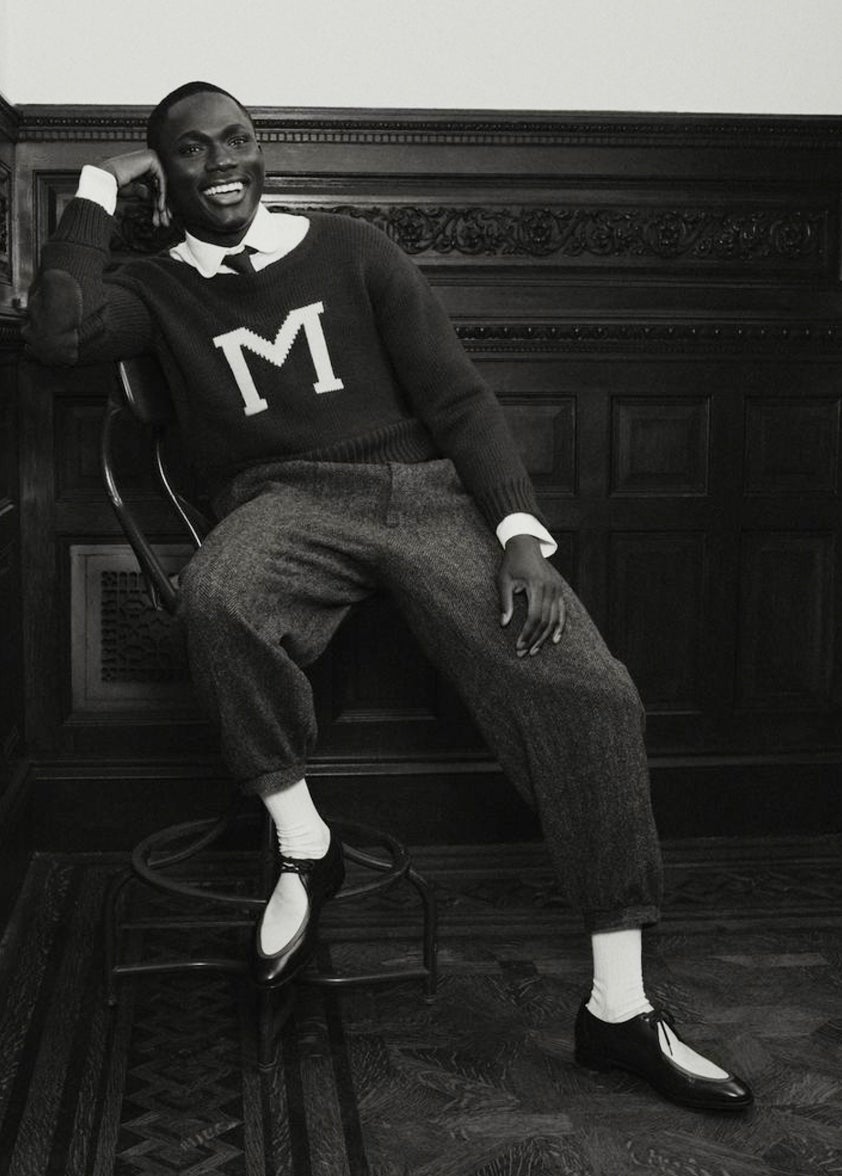
From top, the author in a look from the 2022 Polo Ralph Lauren Historically Black Colleges and Universities collaboration, photographed by Tiago Chediak; a room inside the Superfine exhibition; and the book that inspired the show.
But what exactly is a Black dandy? Within the context of the show, the exhibition notes explain that Black dandies use "dress and fashion to transform their identities, proposing new ways of embodying political and social possibilities." Guest-curated by Monica L. Miller, and based on her groundbreaking 2009 book, Slaves to Fashion: Black Dandyism and the Styling of Black Diasporic Identity, it's through this distinct lens that we get to explore the Black experience both within the US and throughout the diaspora. To achieve this, the exhibition brings together more than 200 artifacts and some of the most important Black creatives—past and present—not as a disparate set of individuals but as parts of an almost seamless, evolving continuum, all offering their own take on the desire to use clothing as a way of defying the common consensus and creating their own identities. And so, as you walk through the exhibitions, which are divided into 12 themes ("Ownership," "Disguise," "Freedom," and so on), early on you'll see a portrait from 1802 of the formerly enslaved Toussaint Louverture astride a horse and dressed in full military regalia. The first Black general in the French army, he was also instrumental in the creation of the Republic of Haiti. You'll later encounter a cabinet dedicated to the Black Panther Party, containing a 1969 cover of its official newspaper, featuring its founding fathers, illustrated by Emory Douglas; an embroidered beret from the early 1970s; and an Afro comb, designed by contemporary Dutch design group Botter. Combined, these iconic symbols associated with the movement—the raised fist, combat boots, tilted berets, Afro hair—create a distinct visual and cultural language, which continues to be referenced today.
MILES OF STYLE
From left, the cover and a spread from the author's book, Black Ivy: A Revolt in Style, which is available at the exhibition.
And later still within another area, you'll see the conspicuous opulence as defined by hip-hop culture in the shape of a Louis Vuitton monogram-print leather jacket. Designer Dapper Dan, independently of the brands, appropriated luxury products and redesigned them for his own high-end clients in Harlem, including hustlers and later rap artists. While these three examples couldn't be more different, what they share is a consistent through line of defiance by dress code. Full of visually vibrant pieces and images, the show's more muted expressions of dandyism personally drew me in more. Perhaps that's because, in a visual sense, I see myself as the antithesis of a dandy. I like to dress in a low-key, almost understated way. But it isn't without effort and it isn't without intention, and in that respect, I do ascribe to the exhibition's aforementioned definition of dandyism. From my teens onwards, I've been made aware on numerous occasions that for some people my race and social background means the last thing I should be wearing is Ivy League-style clothing—the uniform of the elite. But in some ways, understanding this led me to recognize the power of clothing and its ability to challenge social prejudices. It's also what led me to write Black Ivy. So naturally, I was drawn to W.E.B. Du Bois' correspondence with his tailors at Brooks Brothers. Du Bois, a prominent Black civil rights leader from the early 1900s onwards, would have frowned at the idea of being called a dandy, but the letter certainly fits within the context of this show. I'd seen photographs of the letters in books over the years, but to know they still exist and to see them in real life, took me totally by surprise.

“While these three examples couldn’t be more different, what they share is a consistent through line of defiance by dress code.”

WELL-SUITED
From left, a caftan and a bespoke suit made by Morty Sills, from the archives of longtime Vogue editor André Leon Talley.
WELL-SUITED
From left, a caftan and a bespoke suit made by Morty Sills, from the archives of longtime Vogue editor André Leon Talley.
I also enjoyed seeing two of the more unassuming pieces relating to André Leon Talley, who passed away three years ago. Writer, creative director, stylist, and Vogue editor-at-large, Talley was a larger-than-life figure, a true dandy. His taste level, his commitment to fashion, and his fierce individuality cannot be underestimated. Talley refused to be limited by social boundaries, opening doors for many other Black creatives to walk through. The entire show was in some ways inspired by him. His two tailored suits on show by two menswear legends—Jeffrey Banks and Morty Sills—renewed my appreciation of his vision and contrasted with his other more attention-grabbing pieces.
BACK TO SCHOOL
Top, looks from Superfine, including one from the 2022 Polo Ralph Lauren Exclusively for Morehouse and Spelman collection; below, a look photographed by Tyler Mitchell and styled for the same collection.
BACK TO SCHOOL
Top, looks from Superfine, including one from the 2022 Polo Ralph Lauren Exclusively for Morehouse and Spelman collection; below, a look photographed by Tyler Mitchell and styled for the same collection.
I also enjoyed seeing the archival pieces from Ralph Lauren's 2022 historically Black colleges and universities collaboration and had the privilege of wearing a blazer and tie from that collection to the exhibition. While these clothes may not look loud or attention-seeking, to those committed to the idea that preppy and Ivy style should be the exclusive domain of a privileged few, wearing them is possibly as provocative and daring as any of the looks within the exhibition. The clothes, and the sunny walk to the museum, offered the perfect visual and—I'll admit—emotional preparation for Superfine. What I love about this show, and why I'd encourage everyone to see it, is that it's so immersive, so beautiful, and yet holds nothing back when it comes to explaining some of the harsher realities of the Black experience that exist behind many of beautiful objects and exceptional clothing. The warmth of the day had gone by the time I left Superfine that evening, but that didn't deter me from retracing my steps from earlier. I had to. I felt there was so much to think about and process—despite feeling like I needed to go back later and spend more time there. The show is so expansive and detailed. It manages to balance design, culture, and insight in a way that makes you realize that although dandyism is about clothes, it's also about so much, much more.

JASON JULES, the author of Black Ivy: A Revolt in Style, is a London-based writer, cultural commentator and style consultant.