The authentic and timeless world of Ralph Lauren
February 2025
RL/People

The RL Q&A:Freddie L. Rankin II

The multidisciplinary artist and photographer of Polo Ralph Lauren’s collaboration with Morehouse and Spelman Colleges on Black style, his creative ambitions, and more
Freddie L. Rankin is many things: artist, photographer, founder, creative director, and a 2025 Baldwin Fellow for Baldwin For The Arts. He’s also a friend to the World of Ralph Lauren, having photographed the Polo Ralph Lauren Exclusively for Morehouse and Spelman Colleges campaign in 2022, which are two Historically Black Colleges and Universities (HBCUs)—an extension of his striking and emotive Black portraiture, which began when he was a student at Morehouse himself. A Memphis-born, Bronx-based artist, Rankin moves fluidly between photography, sculpture, painting, and performance. His work has been exhibited globally, from Atlanta to Italy, centering themes of identity and pleasure. Here, the artist sits down with Ralph Lauren’s Dara Douglas, Brand & Product Lead, Design with Intent (and a Spelman College alumna herself) to speak about his work with Polo, his portraits of Black identity, and how Black style has changed the world of fashion.
Left to Right: Prinston Nnanna, 2019, Jazmine Hayes, 2019, LaTonia Allen, 2019, Bradley Ward, 2019, Isis Arias, 2019

How did you start your creative journey?

It started with photography. At Morehouse, I shot for The Torch, the campus yearbook, but it wasn’t until after I graduated that I committed myself to it. I devoted myself to it full time, went to Italy for a year to study, and really dove in with the little knowledge that I had, because I knew it was something that I wanted to pursue.

It’s amazing the budding creative experiences, like that, that people can have at HBCUs. Do you have a specific message that you look to convey through your art now?

At the core of my work is openness: an invitation for viewers to bring their own experiences and interpretations. I want them to connect through their senses: to feel, touch, see, and even imagine, letting their individual perspectives deepen their engagement. My work is autobiographical, and I approach pleasure as a daily ritual. Naturally, I’m drawn to places and people that exude presence, self-assurance, and joy in its many forms. Take my ongoing portrait series, Whispers of a Silent Song, that began in 2020. I didn’t set out thinking, “Let me document Black joy”—but the work flowed out of the values simply inherent to my practice. The series hearkens back to Thomas Askew’s portraits displayed by W.E.B. Du Bois at the 1900 Paris Exposition. Askew’s work projected a vision of Black identity that was radical and affirming. In a similar way, my portraits reflect moments of respite and authenticity—individuals being fully themselves amidst life’s chaos. It’s about re-centering the self, not in opposition to anything, but as a powerful affirmation of existence.
Artist’s selects from Whispers of a Silent Song series. Top row, left to right: Alex Tyree, 2020, Deanii “Scottie Beam” Scott, 2021, Melat Hagos, 2020 Bottom row, left to right: Nneka Etoniru & Stephanie Casimir, 2020, Penda N’diaye, 2020, Hanan “Xanan” Osman, 2020

At the core of my work is openness: an invitation for viewers to bring their own experiences and interpretations. I want them to connect through their senses: to feel, touch, see, and even imagine, letting their individual perspectives deepen their engagement.

Polo Ralph Lauren Exclusively for Morehouse & Spelman Colleges Collection, yearbook photos, 2021.
Top: Thea A. Johnson
Bottom: Indi Clayton

I was wondering why you chose black-and-white photography as a medium versus color photography. Was it because of Askew’s work? The juxtaposition of showing present Black bodies in a way that’s reminiscent of the past? That’s partially how I took it, as demystifying those from the past and continuing a through line of identity.

I appreciate that interpretation—it’s certainly a part of it. But my love for analog processes plays a big role. Whether that’s film, wet plate collodion, gum bichromate, or cyanotype, I am drawn to methods that are tactile. Raw black-and-white film offers a timeless quality, and its imperfections make the photographs feel alive. It’s less about nostalgia and more about grounding the work in something elemental, something real.
Polo Ralph Lauren Exclusively for Morehouse & Spelman Colleges Collection, yearbook photos, 2021.
Top: Thea A. Johnson
Bottom: Indi Clayton

You used a vintage camera when photographing the yearbook of the Polo Ralph Lauren Exclusively for Morehouse and Spelman Colleges campaign, too. Can you talk about that experience as a Morehouse graduate yourself?

It was a full-circle moment. The cameras that I use for the Whispers of a Silent Song series were the same ones I used for the Morehouse and Spelman collection. The collection itself was inspired by a 1924 Morehouse yearbook, so contributing to something so rooted in history felt deeply personal. Both of these houses, Morehouse and Ralph, are storied institutions. Being able to contribute to a collaboration between the two was an invaluable experience for me. My approach is typically very intimate—just me and the sitter—allowing them the space to embody their full selves. Even with the hair, makeup, and wardrobe of the 2022 campaign, I wanted the essence of pride and presence to shine through.
Polo Ralph Lauren Exclusively for Morehouse & Spelman Colleges Collection, yearbook photo, 2021. From left: Jalen Campbell, Kenneth Lewis, Dimone Long

Where do you usually find your inspiration?

I’m fascinated by layers: what is, what could be, and the stories hidden in between. Suppose I thrifted a vintage Ralph Lauren tweed sport coat. Who owned it before? What did they experience while wearing it? When we alter or repurpose something—patching a hole or adding embroidery—it often takes on a new life. That sense of transformation mirrors my own creative process: finding narratives in the unformed and imagining what they could become.

The upcoming Met Gala theme is Superfine: Tailoring Black Style. When you think of Black style, are there any specific style icons that come to mind?

When it comes to tailoring, Tyson Beckford is the first name that comes to mind. In the ’90s, you couldn’t escape him—he defined the tailored Black man for that era. André 3000 is another for his avant-garde brilliance. I think they’re both men of their times, and they both occupy a space and time where the rules around fashion were allowed to be broken, in a way. My other style inspiration would be Marvin Gaye, who’s also very much a man of his time. If you think about his era of style, he’s the epitome of that for me.

What impact do you think that Black style has had on fashion?
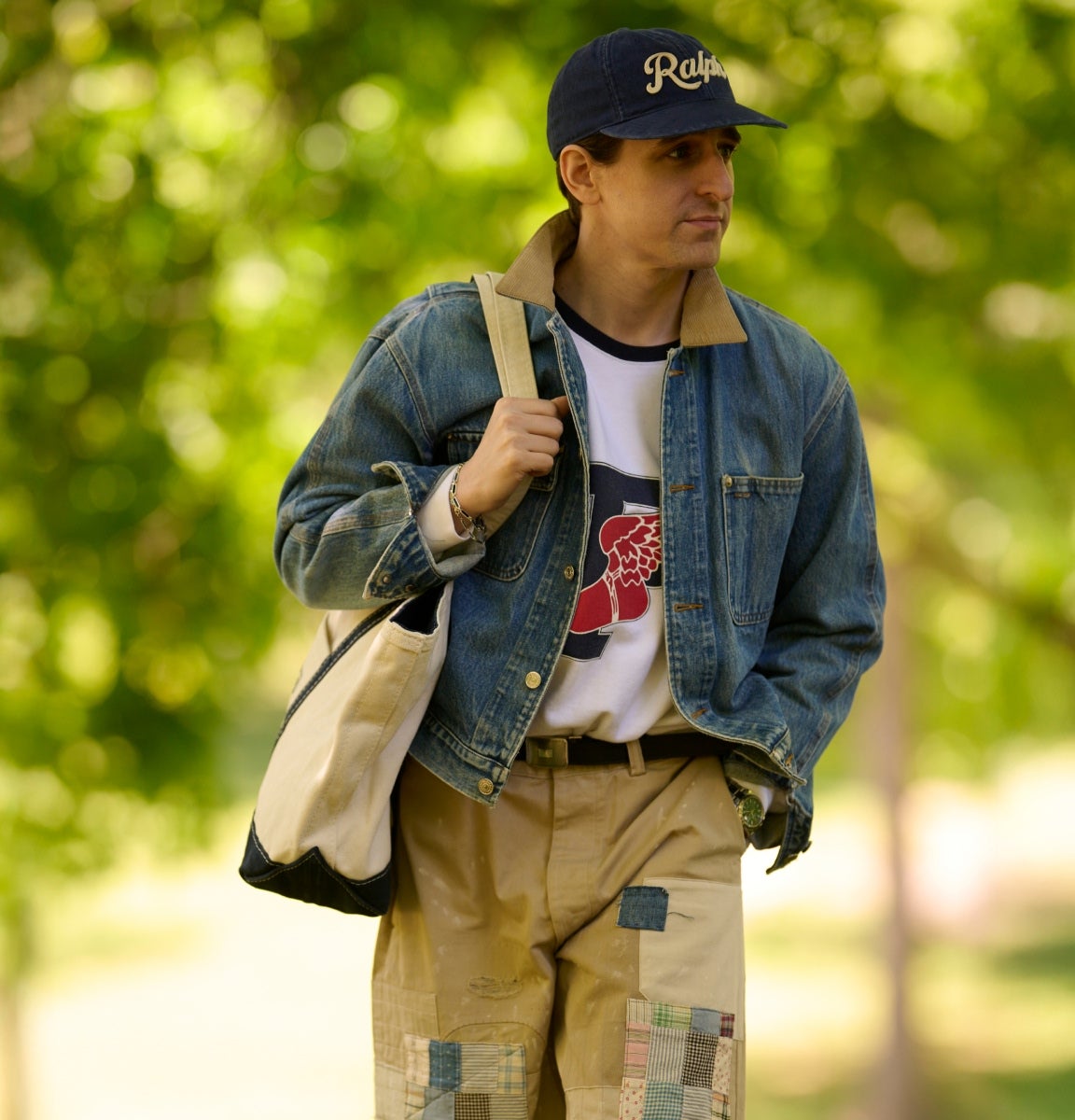
Black style is fashion—full stop. I think specifically about the ways in which Black style goes from counterculture to mainstream, redefining the rules along the way. The ability to reimagine elements of respectability and break them wide open has been revolutionary. Black style is about vision, resistance, and creating new possibilities.