The authentic and timeless world of Ralph Lauren
February 2025
RL/People

The RL Q&A:Nyle DiMarco

Being deaf hasn’t kept the model, actor, and filmmaker from cutting through the noise, as his new documentary is about to show to the world.
For a man without the ability to hear, Nyle DiMarco is making a lot of noise. The 35-year-old model, actor, and advocate for the Deaf and disabled — who you might have seen on TV as the winner of America’s Next Top Model, or walking the runways during men’s fashion week — is about to add “director” to his résumé as he and the Academy Award–-winning Davis Guggenheim unveil their new documentary at this month’s 2025 Sundance Film Festival titled, Deaf President Now! The documentary tells the story of the eight tense days of protest that took place at DiMarco’s alma matter, Gallaudet University, in 1988. A pioneering school for the Deaf and hard of hearing in Washington, D.C., the school faced a reckoning when its board of trustees, tasked with appointing a new university president, chose the sole hearing candidate for the position over other, highly qualified Deaf ones. The ensuing student protests were swift and fierce, demanding a leader who could relate through his their shared disability. As the film recounts, that fight didn’t just end there — two years later, the Gallaudet protests helped lead to the groundbreaking Americans With Disabilities Act of 1990. Earlier this month, DiMarco, a fourth-generation Deaf person who grew up in Maryland and who now spends a lot of time on a plane going between the East and West Coasts, spoke with us about how he got to this moment.

—Andrew Craig

LEADING A MOVEMENT
DiMarco’s film centers around the Deaf Gallaudet students above: Jerry Covell, Bridgetta Bourne-Firl, Tim Rarus and Greg Hlibok. The Gallaudet Four, as they’d come to be known, turned Deaf President Now! from a campus protest into a movement that would change the course of American history.

What was it like growing up in an entirely Deaf household?

You might think it would be quiet, but it’s actually the opposite! We don’t always realize the noise we make, whether it’s washing and putting away dishes or doors slamming. If you visit us, you’ll leave with a headache! But, in all seriousness, growing up as a fourth-generation Deaf person was both empowering and grounding.

Fourth generation — so, your parents, their parents, and so on? Is that common?

Right! My parents are both Deaf, my grandparents were Deaf, and so were their parents. My two brothers are both Deaf, too. It’s rare — only 10 percent of Deaf children come from a Deaf family — but it also means I grew up in a world where sign language and Deaf culture were fully embraced.

What about that experience growing up made you want to be an advocate for the disabled now?

My family taught me that being Deaf is not a limitation but a source of identity and pride. I also grew up watching my mom fight tirelessly against my Deaf high school for better Deaf education and for the school to hire Deaf teachers so the students could have access to American Sign Language (ASL). Her activism shaped my understanding of what it means to fight for representation and equality, and that change is always possible When I got older, I learned that only 2 percent of Deaf kids worldwide have access to formal education in sign language. I realized I’d been extremely lucky. It made me determined to do what I could to ensure all Deaf kids, no matter where they are, have access to the education, language, and resources they deserve.

What was it like to learn ASL yourself?

I don’t have a memory of “"learning”" ASL—it was just there, part of my life from the beginning. I was fortunate to grow up in a signing household myself, but my dad didn’t have the same experience. He was raised oral-only, meaning he was forced to lip-read and speak instead of using sign language. More than 75 percent of parents chose not to sign to communicate with their Deaf child, like that. But when my dad finally learned ASL as a teenager, it changed his world. Without it, I can’t imagine how isolating life would be. That’s why I push so hard for access—no Deaf child should have to grow up without language.
THE SUNDANCE KID
For his big premier at the Sundance Film Festival in Park City, Utah, DiMarco mixes tailored Polo classics with rugged western details.

The Deaf Point of View (DPOV) is about immersing audiences in the experience of being Deaf. It means prioritizing visual storytelling, relying on body language, facial expressions, and environmental details that Deaf people naturally observe and experience.

Can you tell me what significant things about your work and life helped lead you to this, the premiere of your first documentary?

Over the past decade, I’ve produced Deaf U, a Netflix docuseries that explored the lives of Deaf students at Gallaudet, and Audible, a Netflix documentary about a Deaf high school’s football team that was nominated for an Academy Award. And growing up, my mom would recount the story of the Gallaudet protests, a pivotal civil rights movement that inspired generations of Deaf individuals. She went to a different university with a Deaf program, Rochester Institute of Technology, but the movement at Gallaudet resonated with her and ignited the activist in her. It has for me, too. That’s why it was important for me to bring this story, which remains largely unknown in mainstream history, to a wider audience.

What inspired you to bring this specific story to the screen?

Deaf President Now! represents the power of never backing down, the power of unity, and the fight for representation. There are so many Deaf events that have shaped America yet are rarely acknowledged. The Deaf President Now movement wasn’t just about Gallaudet—it led to the passage of the Americans With Disabilities Act (ADA), which protects the rights of the largest minority group in the country: disabled people. And Deaf advocacy has influenced society in ways most people don’t realize. For example, Deaf people fought for closed captions in media, but the general public thought they weren’t necessary. Today, captions are used everywhere—on TikTok, Netflix, in bars—by hearing people every day. Despite the contributions Deaf people have made to society, we continue to be ignored, and our histories are erased. That’s why representation is so important. It’s not just about visibility; it’s about reclaiming our place in history.

I’m curious about the narrative approach you call the Deaf Point of View. Can you speak a little about that?

I wanted viewers to see the world through a Deaf lens, which meant focusing on visual storytelling, silence, and the nuanced beauty of ASL. The Deaf Point of View (DPOV) is about immersing audiences in the experience of being Deaf. It means prioritizing visual storytelling, relying on body language, facial expressions, and environmental details that Deaf people naturally observe and experience. For example, we used sound design to contrast hearing and Deaf perspectives, and we visually highlighted moments where ASL and being Deaf can actually be an advantage!
POLO WESTERN
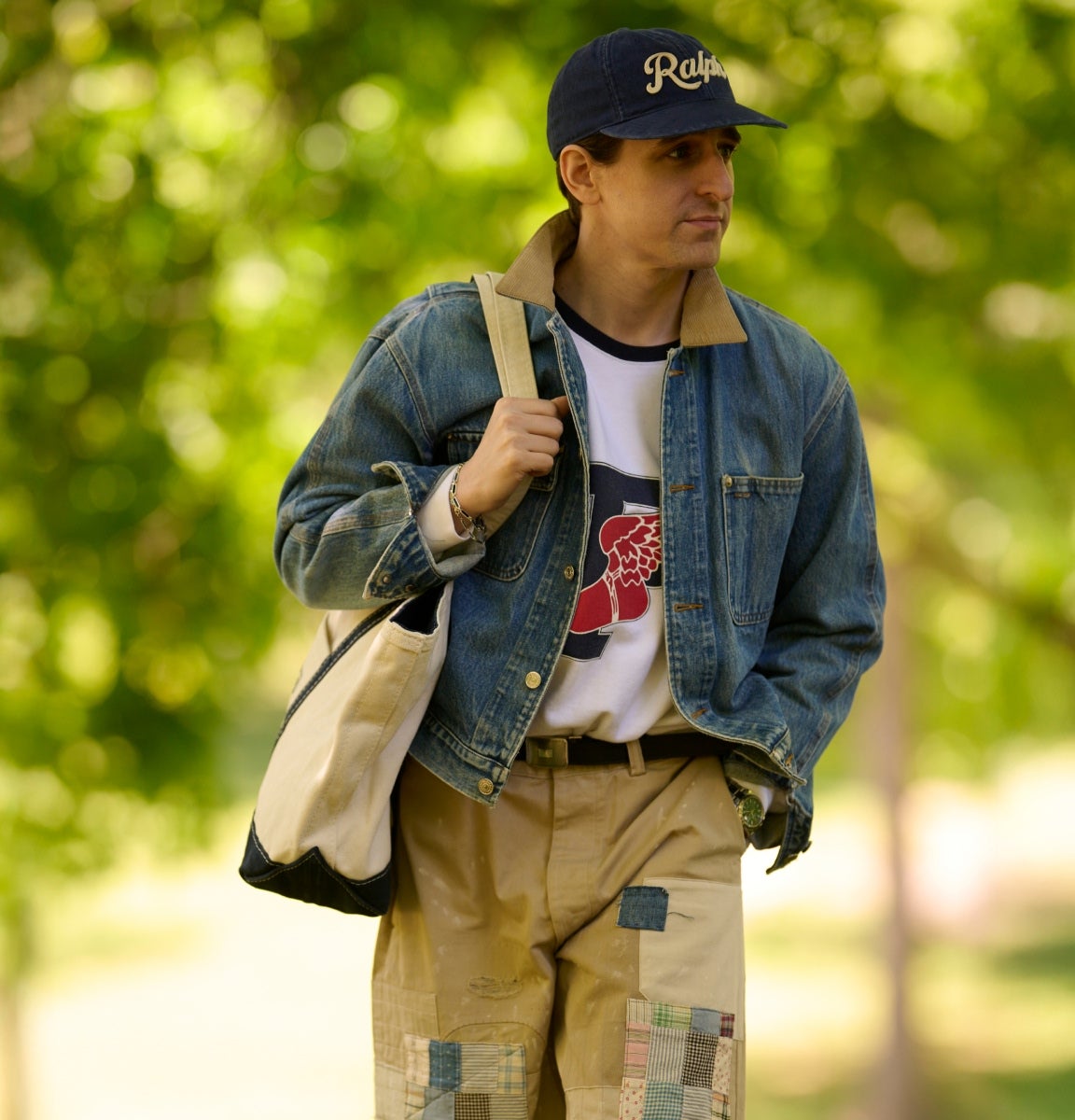
“I’m a big fan of Ralph Lauren’s western-inspired pieces,” Nyle says. “I love the bits of cowboy influence that come through in the designs — it’s rugged yet sophisticated, and it feels timeless.”
POLO WESTERN
“I’m a big fan of Ralph Lauren’s western-inspired pieces,” Nyle says. “I love the bits of cowboy influence that come through in the designs — it’s rugged yet sophisticated, and it feels timeless.”

What impact do you hope your film will have for today’s conversations around disability rights and representation?

I hope our documentary reignites conversations around disability rights and representation — how far we’ve come, but also how far we still need to go. I hope it helps hearing people become more aware of Deaf culture. I want to bridge the gap between the Deaf and hearing worlds through universal experiences.

Do you have any new projects in the works, after this documentary?

I’m developing some new films and TV series that center Deaf characters and talent, and there are a few other exciting projects on the horizon that I can’t talk about just yet—but stay tuned!

You also have another job as a professional model. Any plans to continue that?

I still model and I am open to opportunities, but my focus has shifted towards the entertainment industry and activism work.

How did you first get into modeling?

Modeling was never something I planned but, you know, life has a way of surprising us! Before modeling, I was an actor and was in a Deaf indie film that was produced, directed, and written by Deaf creatives. After that, I landed a small role in the show Switched at Birth. Then, America’s Next Top Model found me through Instagram, and everything changed. Tyra Banks and the casting team didn’t realize I was Deaf until I asked them if they were ready for a Deaf cast member!

What has it been like to work in the fashion industry as a Deaf person? Are there unique challenges to it, for you?

Working with photographers has never been an issue since communication relies heavily on body language, and Deaf people are naturally skilled at reading and expressing body language. So, it felt intuitive. Things get trickier when it comes to meetings with brands or attending fashion shows. The challenge isn’t just about finding an interpreter—it’s about who covers the cost (most of the time, they don’t), or whether they’ll even allow me to have an interpreter present. Some brands still don’t fully understand the importance of accessibility, and that creates unnecessary barriers. Hopefully, future generations won’t have to fight for something as basic as communication access.

How would you describe your personal style?

Style is a way to stand out and assert your presence in spaces where you can too easily be overlooked as a Deaf person. I’m all about versatility and confidence. For me, it’s often about layering and textures, and experimenting with pieces that I never would have imagined myself wearing.

What will you be wearing for the premiere?
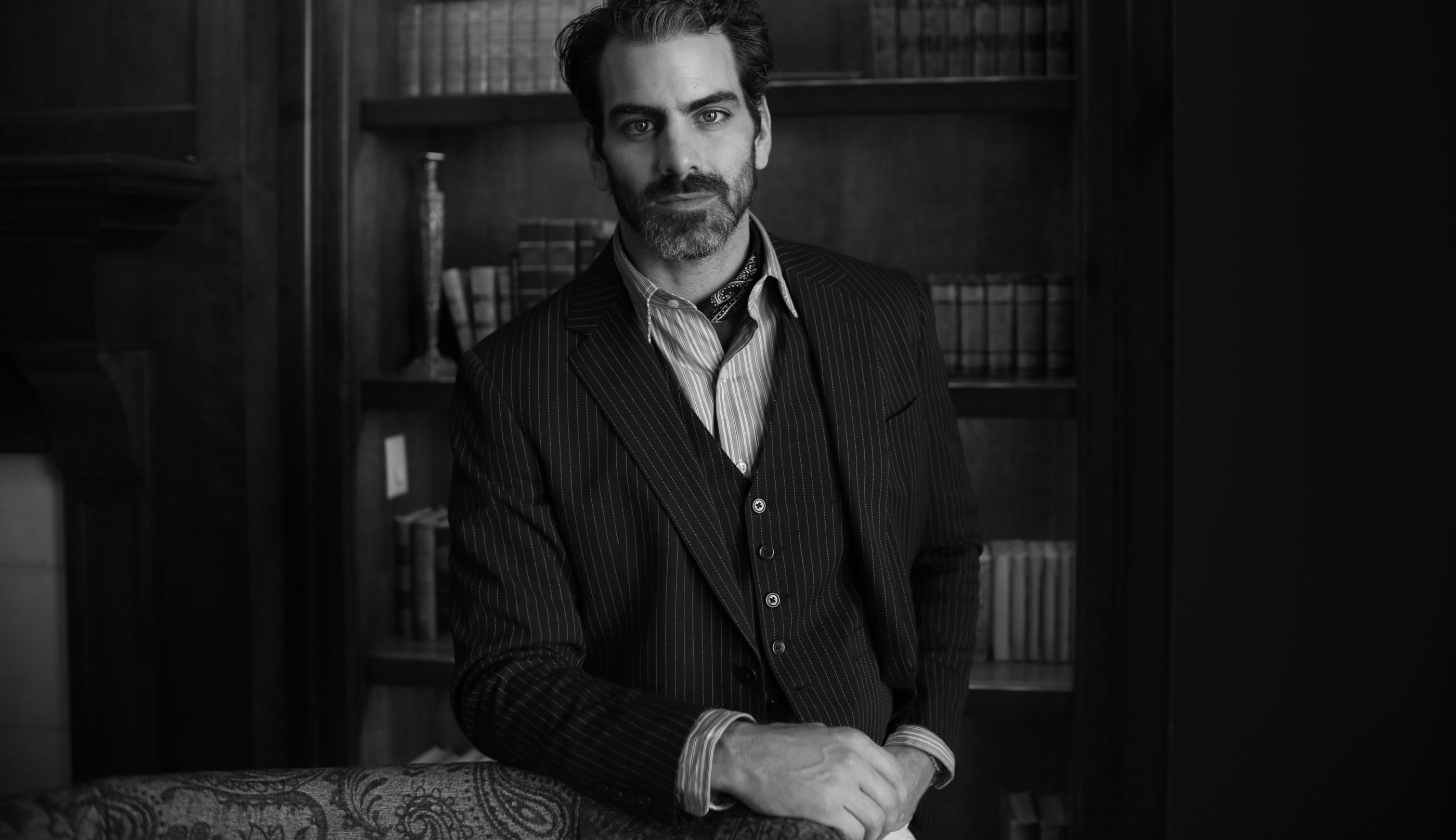
A combination of classic Western-inspired elements with a soft, tailored style: a Polo tailored pinstriped jacket and vest, with cream-colored straight-leg trousers and cowboy boots. I was drawn to the pieces because I thought they stood out as something I rarely see at events like this. And I love to switch it up sometimes!