The authentic and timeless world of Ralph Lauren
August 2025
RL/People

The RL Q&A: Simon Goldman

The menswear consultant and Polo collector proves that quality never goes out of style
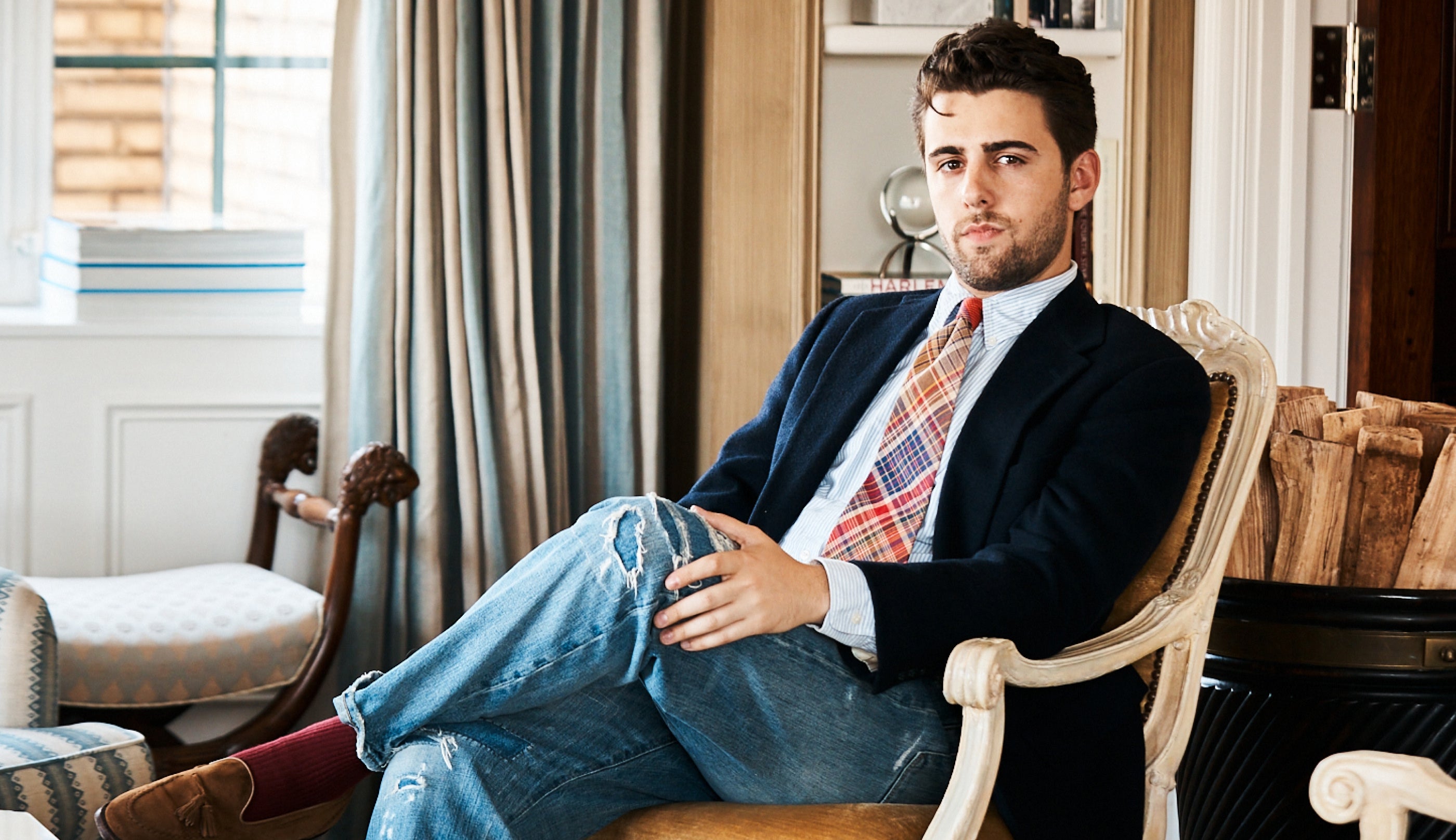
The term “multihyphenate” might be an understatement when it comes to Simon Goldman. At only 24, the designer, content creator, vintage archivist, art collector, and menswear consultant has built a personal style all his own, with a penchant for vintage tailoring and American workwear and a finely tuned eye for detail. Along the way, he’s also built a serious collection of vintage American tailoring, textiles, and more.Through his work designing clothes, advising brands, and creating content, he spotlights the kinds of time-tested styles and quality craftsmanship that you’re likely to find in his personal archive, including a whole lot of vintage Polo. At the penthouse of the Lowell Hotel, a bastion of old-world Upper East Side style located near where a young Ralph Lauren sold his first collection of neckties in 1967, Simon pulled out some of his favorite pieces, which just so happen to be some of Ralph’s most enduring icons: Polo coats, tweed jackets, cricket sweaters, and, of course, a wide range of Polo ties.-Andrew Craig

Were you always interested in clothes? Did you grow up around it?

I grew up in Chicago, and my high-school job was working in a motorcycle shop there. I wouldn’t necessarily call it “fashion,” but I was surrounded by these garments that are made from a very practical standpoint, but also happen to be incredibly stylish. I think my love of clothing grew from learning about the histories and functions of designs like those. Take tailoring, for example. A center vent in a jacket, a specific type of button stance—those details came from a place of practicality and functionality before they became stylish. That’s the lens I love to look at fashion through.The other element, for me, is the craft of it all. My dad instilled in me the idea that you buy something once, you buy it well, and you care for it until it wears out. He hates spending money on clothing, but he’ll buy a very, very good pair of Japanese denim and wear them until they fall apart. And in our family, we had a rule: Once your feet stop growing, you get a pair of custom-made boots. I’ve been wearing mine for the past eight years, and they’ll last me the rest of my life.

How did you learn how to design clothes, yourself?

When I was 14 years old, I started taking classes on sewing, pattern making, and garment construction. For nine hours every Saturday and Sunday, I’d be at the Art Institute of Chicago, learning. My first ever sewing project was a patchwork flannel shirt, because I had seen one at a store and desperately wanted it, but there was no way my mother was going to buy one for me. So I went to the thrift store, bought some old flannels, and figured it out.Later on, I went to school for fashion design in New York, and while I was a student, I sampled, sewed, and pattern-made all around the city as an intern. But when COVID hit, I went back to Chicago to be with my family. At the time, you could rent an incredible studio there for not much money, so I found a space with two big walls of industrial windows, in a building full of artists, just a 10-minute walk from my family’s home. That was my space for sewing and collecting.
Chicago is my favorite city in the world, and there are great scenes for art, music, and food, but not so much for fashion. So I looked to social media and started posting about my sewing journey, which got the ball rolling for me with content creation and gave me some connections to the fashion industry when I moved back to New York.

And now you do all kinds of things, from sewing to consulting to storytelling, right?

Fashion is a ruthless industry in New York, and to survive here, you have to wear many hats. So, I’m a menswear designer, a content creator, and a brand consultant, all at once. A lot of the work I do is connecting heritage companies, like a 100-year-old tailor shop or fabric mill, and help them with their storytelling in a modern and social way. If you’re a brand with 100 years of history under your belt, you probably also have an amazing archive—I help share that with the world.

If there’s one person who does that well, it’s Ralph.

Absolutely. So much of the best clothing is so rich with history. And if you go back into the past and tell the right stories, you can bring so much more life into what you’re offering to the world, and it all feels so much more impactful and personable. I’ve always loved how Ralph Lauren is such a steward of history in that way, and how there are so many vintage references. Instead of looking around to see what everyone else is doing and trying to replicate that, Ralph can just go through the racks of his own archive for inspiration, because there’s a reason he’s been around this long. More brands could learn from that.

For your own personal fashion content, what stories do you try to tell?

My goal has always been to spotlight artisans and craftspeople who make the kinds of clothing that haven’t changed for 100 years, and to tell their stories. Fashion, menswear, and tailoring can all feel very pretentious and exclusionary, so instead of just showing off expensive suits, the lens I want to use is learning about the craft behind it all. All the hours that went into creating something, why it’s made that way, the ways in which it’s special.

What does your closet look like? It must be pretty crowded.

It is. And in addition to clothes, I have a huge archive of vintage textiles, garments, quilts, everything. With New York apartments, you’re pretty limited as to what you can store, but I’m deeply sentimental about everything that I own, so I have a storage unit here in New York, plus my childhood bedroom back in Chicago that’s kind of become my vintage archive.I have a huge collection of vintage tailoring and Savile Row, mostly from the 1920s to the 1940s, plus lots of hand-knit sweaters, ties, and a big collection of old department store clothing. Being from the Midwest, the department stores were such an important thing there—back in the day, they curated great brands and supported quality clothing manufacturing for the everyday man. And then, of course, I have an extensive amount of vintage Ralph Lauren. It’s mostly pieces from the ’70s to the ’90s, as well as some dead stock Ralph Lauren Home textiles, but I keep some more modern stuff in the mix, too.

Sounds like a great place to pick out an outfit.

It is. But my latest problem is something I’ve started adopting from my dad: I’ll find one thing I love, and I’ll just wear it every single day.

Do you collect anything else, besides clothing and textiles?

I have a growing collection of folk art, which kind of fits in with it all. Before I started formally taking classes in garment construction, I was buying old, secondhand sewing textbooks and teaching myself the basics that way. The concept of all these amazing folk artists, who are largely untrained, self-taught, and using only what materials they have access to, really inspired me. I love that concept of people making beautiful and meaningful items just from what’s readily available. Like Purvis Young, one of my favorite artists, who painted on cardboard or pieces of wood he found outside. I think there’s a real beauty and honesty in craft like that. The storytelling, the folklore, the passing down of stories and craft from generation to generation. How can you not love that?

How does Polo fit into your vintage archive? What is it about what Ralph has created, over the years, that resonates with you?

The thing I love about Ralph is that before it all, he was a tie salesman. I have a collection of a few hundred ties now, and they’re some of my favorite things to wear and collect, from vintage hand-painted ones from the ’40s to more modern designs, and so many of them are from Ralph. I love how he made great clothing because he wanted to wear great clothing. It was never about reinventing the wheel, necessarily—it was little things, like widening a tie, adjusting the lapels, playing with silhouette. You can see it in the vintage pieces: Look at a Polo tweed sport coat from the ’70s and compare it to one from the stores today. You’ll see how small details might’ve changed, but the shape and the concept have stayed the same, because they’re perfect. They’re clothes that can be worn by anyone, every single day. And beyond the clothes, it’s the world-building. Whether an old Polo Western pearl-snap shirt, or the Polo Sports pieces of the ’90s, he really has made clothing for every kind of occasion, event, and personal style.

How would you describe your own personal style?

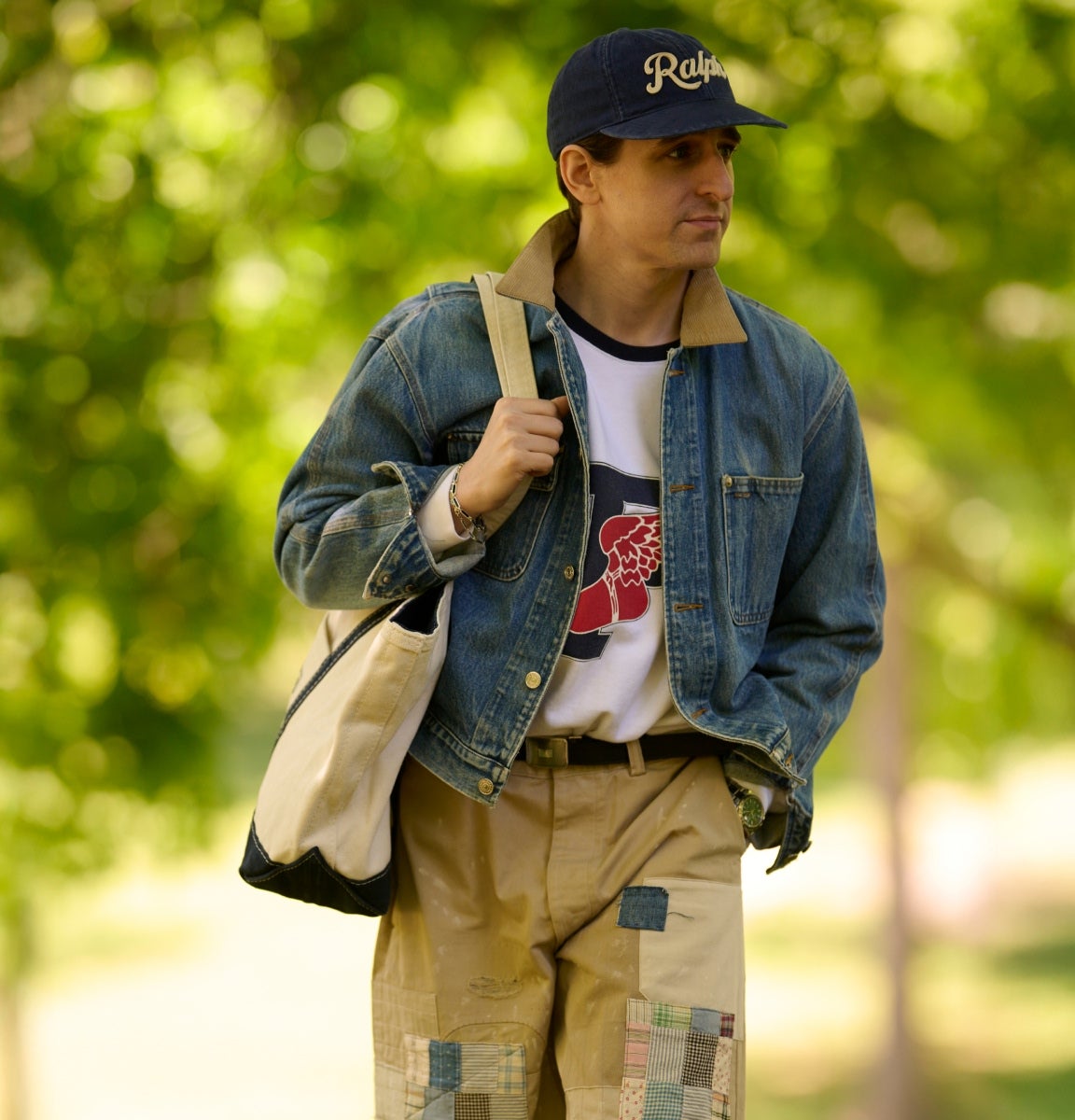
If you see me on a normal day and it’s 60 degrees or under, I’m going to be in a T-shirt, a blazer, worn-out jeans, and work boots. Maybe I’ll swap in some beat-up cordovan split toes, or a frayed button-up with a vintage tie. But I’m generally a pretty uniform dresser, and I like to stay within a formula of mixing heritage workwear with traditional tailoring. Not everyone loves it, but it works for me. When it comes to events, though, I love putting on the right thing for the right occasion. A perfect bespoke suit, or a bow tie, or any opportunity I get to break out my tuxedo. I even have morning dress and white tie getups.

When you’re searching for new pieces, what does your vintage-collecting process look like? Got any tips or tricks?
It’s all about the hunt. My girlfriend and I planned a trip last year, driving in the off-season to Portland, Maine. There are a lot of small, coastal towns along the way there with incredible antique shops, but they close down for the winter. So we went during one of the last weekends they were still open, because they’re more willing to negotiate and offload things before they close up shop for the season.I love to plan my travel based around things like that. When I head back to Chicago, I’ll drive instead of flying, because there are some really great finds in the small-town shops you pass by along the way. Antique stores, estate sales, thrift shops, and even just getting to know people and chatting—there have been so many times when I’ve met people, chatted about collecting, and they’ll say, “Oh, I actually have some of that. Why don’t you come check it out?” You’ve really just got to wander, explore, meet people, and look in unexpected places. I’m rarely, if ever, shopping in Manhattan or Brooklyn, but some of my best vintage tailoring finds have been at random antique malls or estate sales in rural Wisconsin or Ohio.

Andrew Craig is the former men’s content editor for Ralph Lauren.