The authentic and timeless world of Ralph Lauren
Fall 2026
RL/Culture

Inside Out

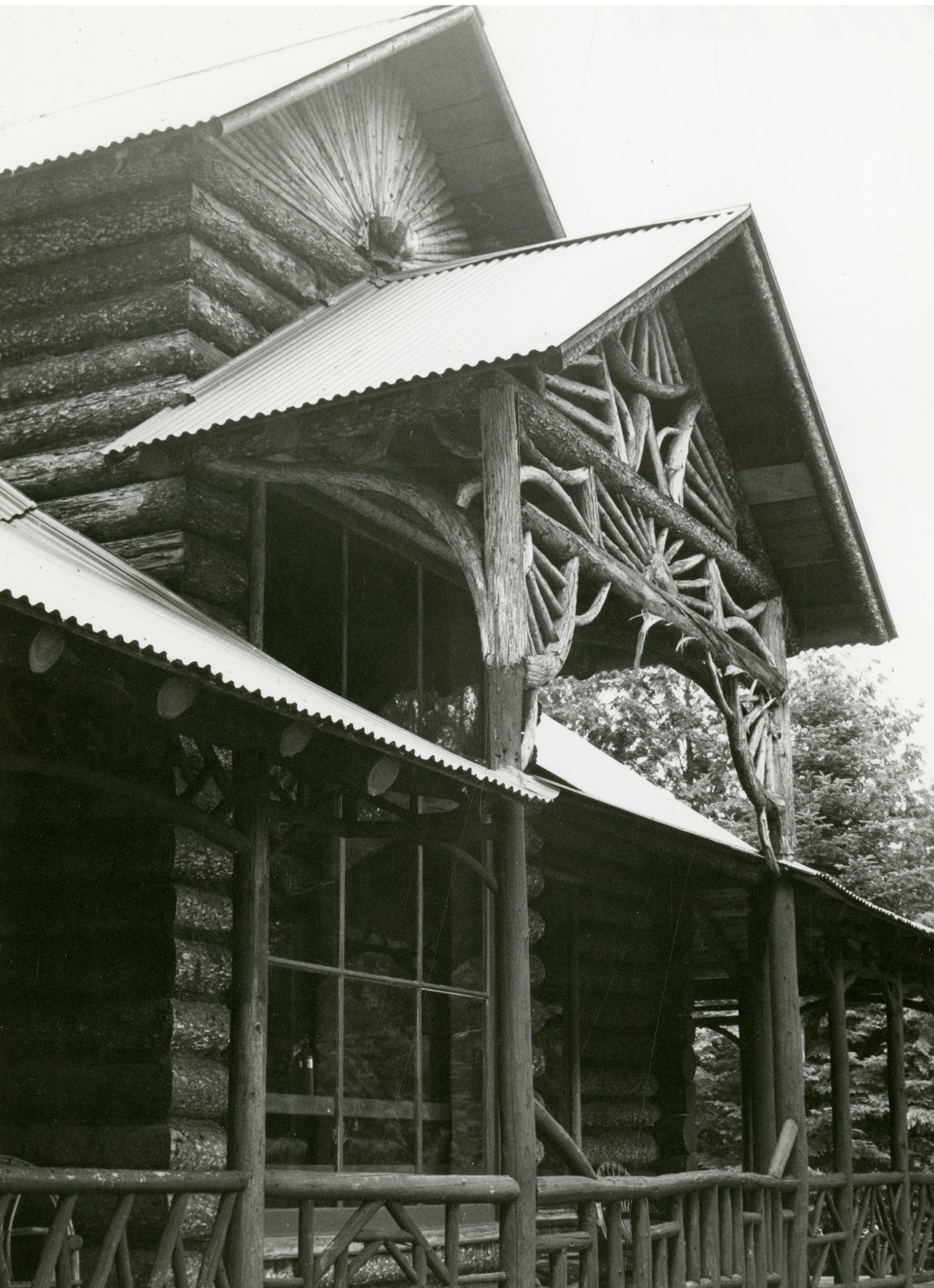
They called it twig architecture, and when the likes of J.P. Morgan and the Vanderbilts built elaborate “tree houses” designed to put them in contact with the restorative powers of the Adirondack wilds, a uniquely American idea was born that brought the outside in, and the inside out.
By Mark Rozzo
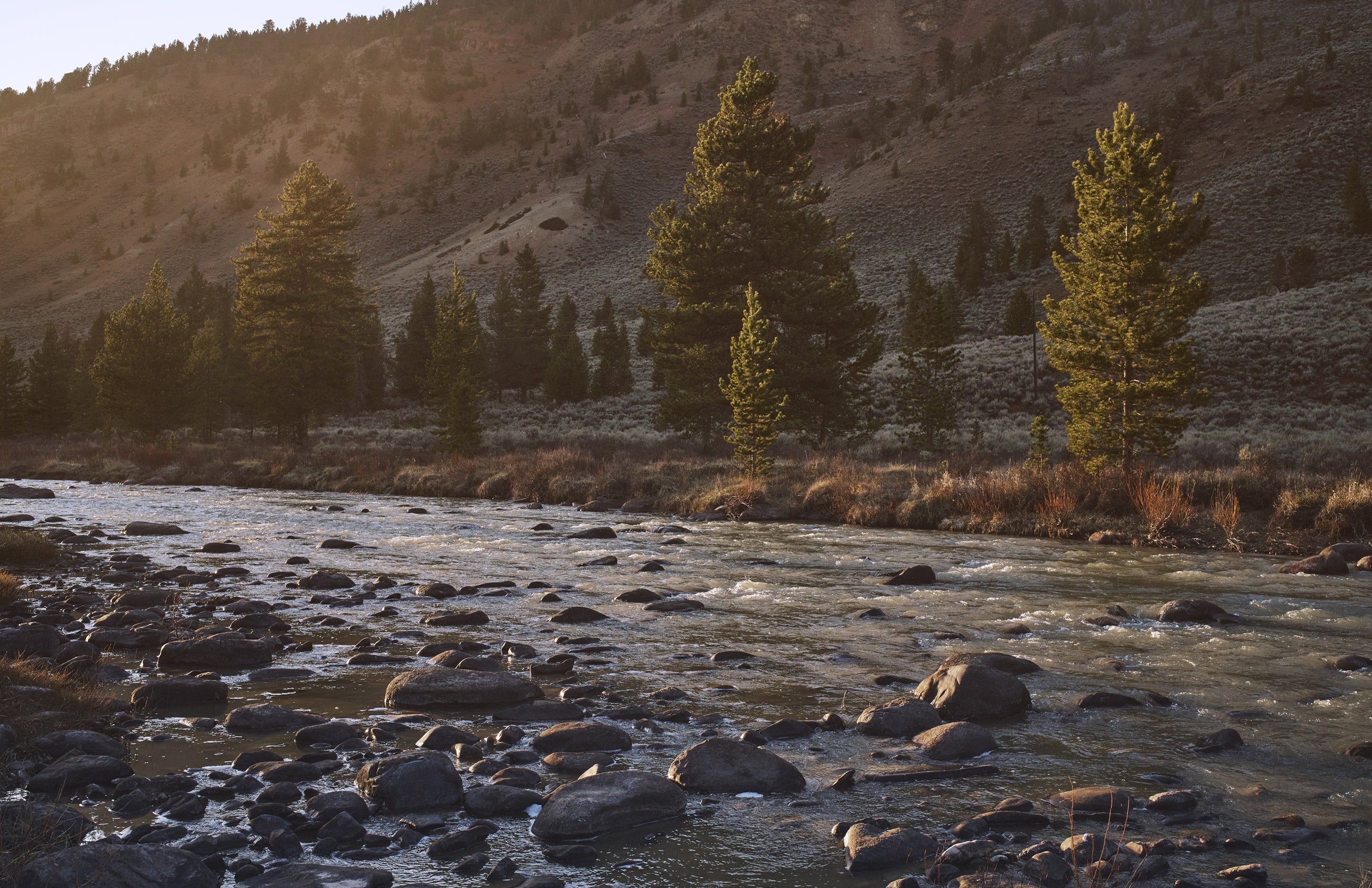
The Adirondack range, in New York state, is an enormous dome, 150 miles across. It began rising 20 million years ago and it is rising still, at the rate of 0.000342465753 inches a day, which means an eighth of an inch a year or about a foot a century. The Adirondacks are rising faster than erosion is trimming them down. On a map, the area looks like a giant splotch devoid of big roads and big towns. It’s all peaks and lakes and streams and thick forest. The Adirondacks were the first accessible American wilderness, thanks to railroads and the 19th-century robber barons who built them—and who, in turn, started building the famous Great Camps.
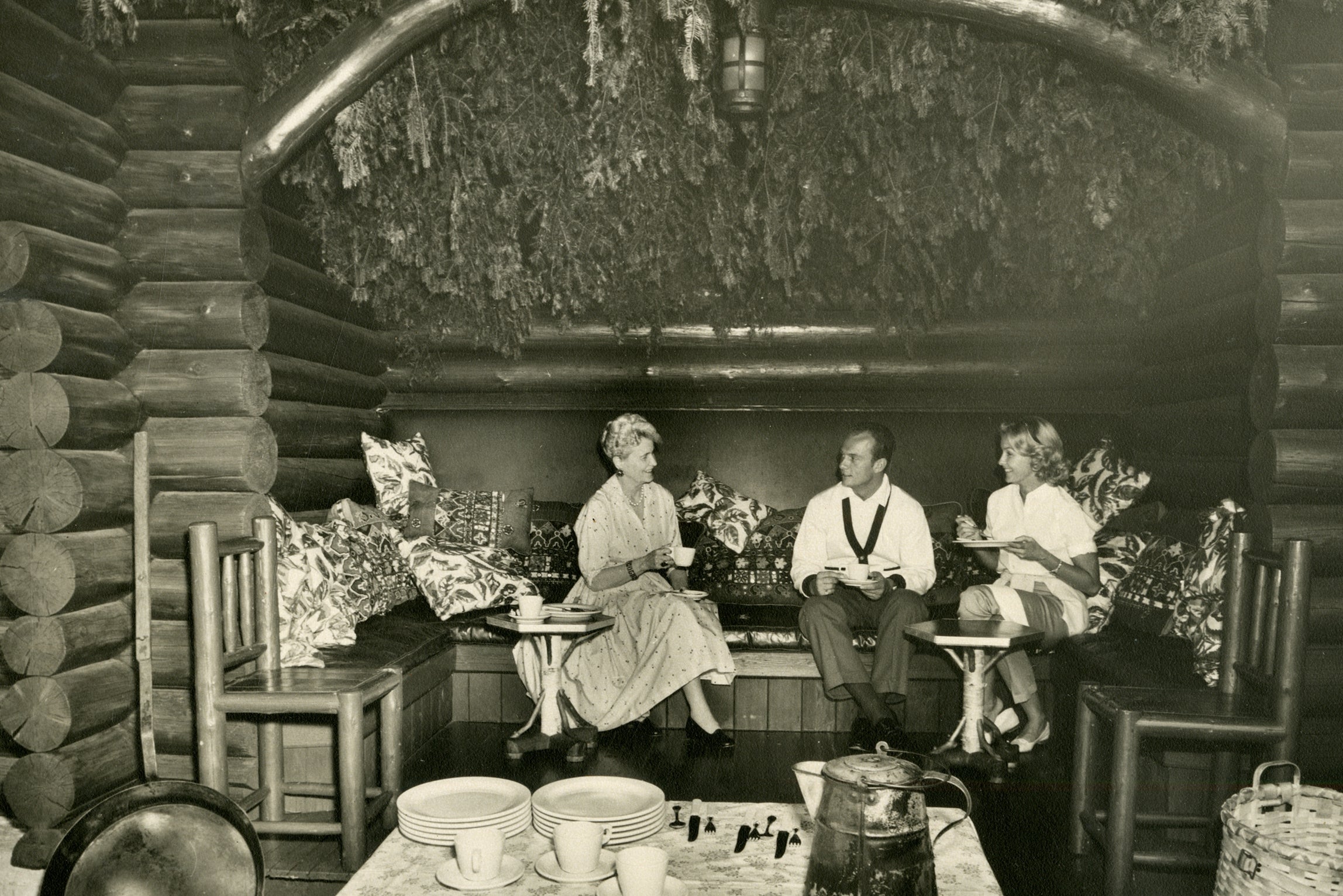
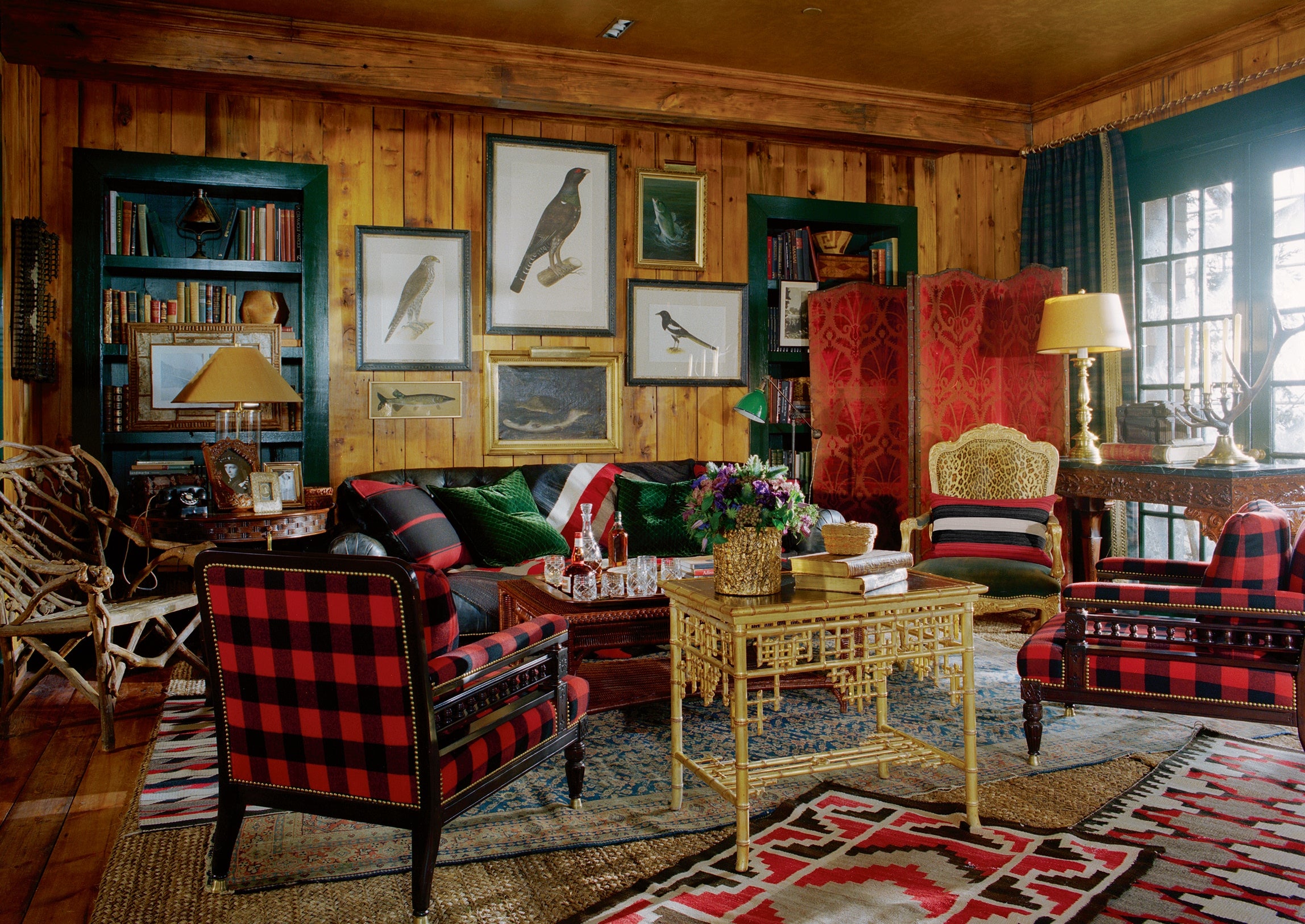
These were the elaborate sylvan bolt-holes of the Gilded Age titans who brought you Standard Oil, United Fruit, the Union Pacific. The camps’ very names conjure up visions of Americana taken to stratospheric extremes: Topridge (Marjorie Merriweather Post’s opulent retreat on Upper St. Regis Lake), Wild Air, Eagle Island, and Pine Knot, the granddaddy of them all. Elegant yet rough-hewn, typically gargantuan, they are the apotheosis of America’s primeval frontier dwelling, the log cabin. The Great Camps of the Adirondacks are camps the way the cottages of Newport are cottages. White Pine Camp, on Osgood Pond, boasted 26 buildings, with two greenhouses, tennis courts, a Japanese pagoda, and a bowling alley. Many of the old Great Camps are still around, either handed down inside families for generations or gobbled up by successive waves of capital-maxxing swells from New York or Dallas or beyond. Some, like Eagle Island, formerly owned by the prominent banker and watch collector Henry Graves Jr., have become kids’ summer camps. Their iconography has spread far and wide—in legend, in literature, and in just about every loggy vacation home and National Park Visitor Center from Lake Placid to Lake Tahoe. As the art historian Caroline M. Walsh once noted, our very concept of rusticity “was defined and refined in the Adirondacks.” In my own Adirondack forays, I’ve found myself, like so many, seduced by swims across crystalline lakes, hikes through autumnal woods, lazy late-afternoon paddles in a canoe, and aimless drives along winding mountain roads. As my teen daughters might put it, the Adirondacks are a vibe. Equally seductive and vibey is the Adirondacks’ own rustic style of furniture, rooted (as it were) in the Great Camp tradition. We’re talking twiggy everything—chairs, desks, tables, consoles, beds, hat stands, and chaise longues, all fashioned out of gnarly, twisted branches and sticks. (“Nature,” as the saying goes, “abhors a straight line.”) There’s also bark, a lot of bark, usually white birch, applied in an array of elaborate designs: stripes, stars, checkerboards, sunbursts. And fancy mosaic twig work, perhaps the highest expression of Adirondack tree furniture. You take straight twigs, cut them in half lengthwise, and place them according to a design marked out on a wooden base. I say “you” with caution. This is work that requires a maddening amount of skill and patience; some designs use 10 different varieties of stick.
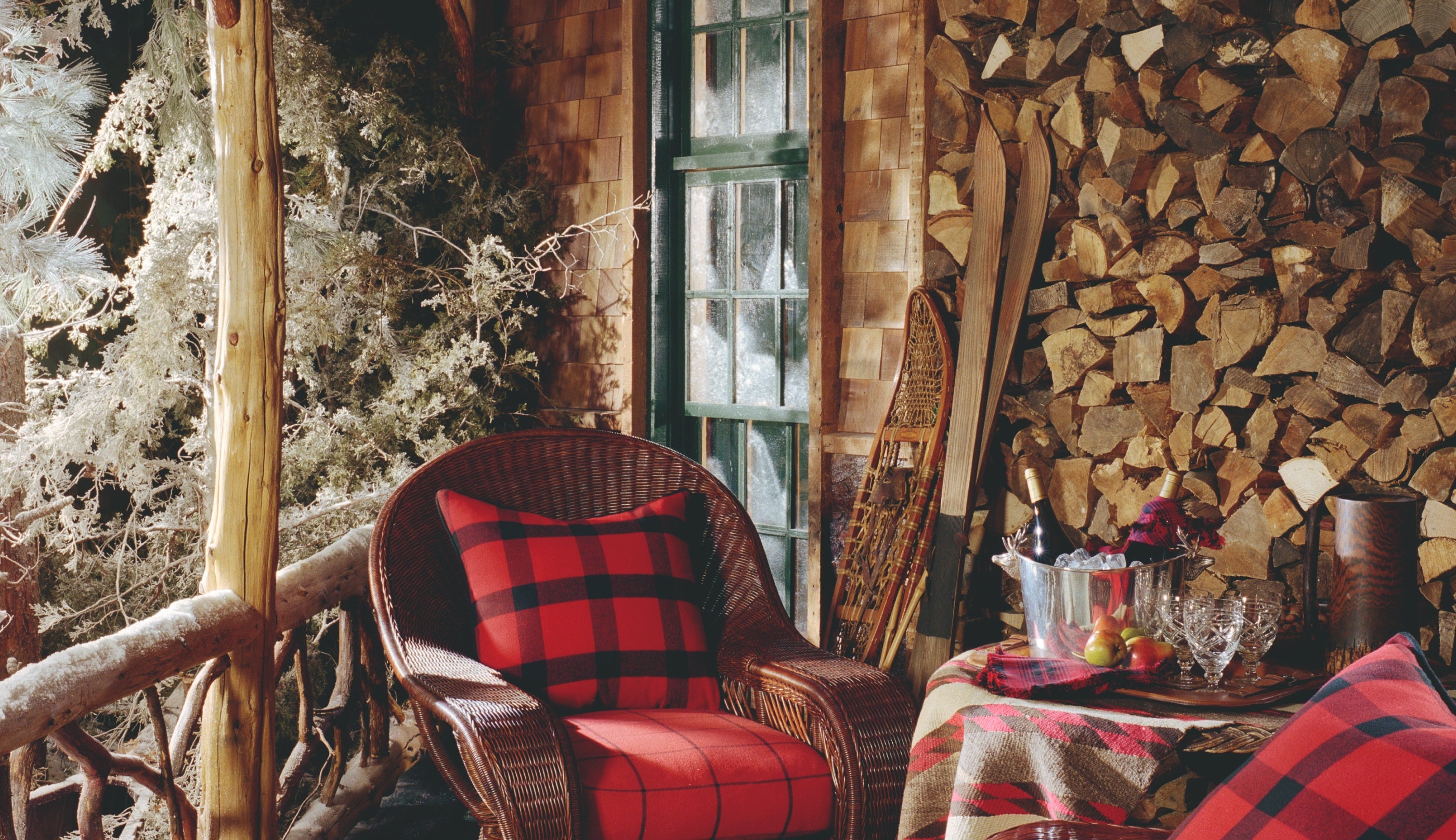
Twig, branch, bark, root, trunk, cone, leaf … nearly every part of a tree is employed. The iterations and variety afforded by these natural materials are seemingly limitless. The tradition goes back to the very beginning of the Great Camp era, when William West Durant, of the Union Pacific Durants, kicked off the craze, building the progenitor of Great Camps, Pine Knot, on Raquette Lake. He sold it to Collis P. Huntington, of the Central Pacific Railroad, and went on to build camps for such clients as J.P. Morgan and Alfred G. Vanderbilt. Durant is the guy who codified the look and feel of the Great Camps—massive log construction, branch-and-twig detailing, rough spruce bark here and there—along with their twiggy furnishings. He was inspired by the example of Alvah Dunning, a local nature guide and hermit who dwelled in a bark-covered shanty. Dunning, for his part, soured on the influx of Gilded Agers and kept moving westward ahead of the wave. Add a splash of Romanticism, a few cottage-aesthetic elements, a Native American nod or two, a touch of wicker, a smattering of Stickley, some Persian rugs, some bits and bobs from the Far East (a Victorian fascination), and you’ve got your basic Adirondack style. It’s summed up by a room photographed at Camp Cedars, on Forked Lake (owned by another Durant, Frederic C.), taken around 1885. Here, one finds the full, brimming cornucopia of Adirondackiana. There’s a twiggy four-poster bed, a cottage-style rocking chair, a campaign table covered by a tasseled cloth, a woven Native American basket ostensibly used as a trash bin, and a big, brawny fireplace with a log façade and lintel. The bark-covered chimney is decorated with Japanese fans, and a Japanese paper-lantern chandelier hangs from the ceiling. This particular interior is iconic enough to have been replicated in diorama form at the Adirondack Experience museum, in Blue Mountain Lake, right down to the bearskin rugs on the floor. Taxidermy! Yes! Stuffed animals—or animal parts—were also a traditional part of the mix: mounted on walls, splayed underfoot, hovering on ceilings, incorporated into furnishings. These specimens were culled from the local population of bears, deer, moose, raccoons, birds, and the like. (Exotic fauna was sometimes trucked in; Brandreth Park, on Long Lake, was tricked out safari-style, with giraffes, tigers, and lions.) Adirondack taxidermists were kept busy; they might be asked to transform porcupine feet into thermometers or moose hooves into inkwells. Sometimes tree branches were incorporated into a Great Camp’s design, both inside and out—all the better for installing stuffed songbirds or even raccoons on, as at Kamp Kill Kare, on Lake Kora. The place also boasted a bear cub mounted under a roof overhang, where it peered alarmingly into a bedroom window. Statistically speaking, Kamp Kill Kare was the all-time leader in the dead-animal category. This year, the camp, with its thousand-acre grounds, sold for $79.5 million.
The indelibly sweet experience of a languid Adirondack summer afternoon, drifting into somnolence in an Adirondack chair (a non-twiggy example of Adirondack design) on a screened-in porch thanks to a collection of E. B. White essays found on a shelf, while the sounds of kids splashing in the nearby lake, along with the pop of tennis balls on a clay court, waft through the air. … It’s the all-American idyll of health and recreation, an ethos of wilderness tamed, if barely. The bookish element bears a moment of consideration, as the Adirondacks are as stocked with literary significance as they are with robber-baron lore, black bears, and birch trees. Take, for instance, William James, co-owner of the Putnam Camp, in the Keene Valley, who found the Adirondacks to be a place of awakening. “It seems,” the philosopher wrote of his mountain sojourns, “as if all the gods of the nature-mythologies were holding an indescribable meeting in my breast with the moral gods of the inner life.” Whether or not James wrote The Varieties of Religious Experience at a twiggy desk is open to conjecture. James was following in the footsteps of the so-called Adirondack Club, a wilderness-loving Boston Brahmin brain trust that included poet-abolitionist James Russell Lowell, Harvard biologist Louis Agassiz, and transcendentalist-in-chief Ralph Waldo Emerson. “Is it true that Emerson is going to take a gun?” Henry Wadsworth Longfellow asked when he caught wind of the Adirondack Club’s inaugural 1858 outing. “Then I shall not go, somebody will be shot.” No one got shot, but the excursion did lead to the establishment of the Philosophers’ Camp, at Follensbee Pond, and Emerson wrote a poem, The Adirondacs, in which he celebrated the rustic appurtenances that offered comfort amid the wilds: “Lie here on hemlock-boughs, like Sacs and Sioux, / And greet unanimous the joyful change.” The poem also mentioned someone, presumably Agassiz, weighing a trout’s brain. The most indelible Adirondackian image of a writer is that of Ulysses S. Grant, sitting on the porch of a Mount McGregor cottage (a wicker chair for him), toiling over his Personal Memoirs while throat cancer took his life away. The autobiography became a whopping best seller after Grant’s death, in 1885, helping to shape America’s literary voice as much as his pal Mark Twain’s novels did. Meanwhile, another presidential author, Theodore Roosevelt, documented 97 avian species in The Summer Birds of the Adirondacks in Franklin County, N.Y. The Adirondacks feature in novels by Ian Fleming and Sylvia Plath and Joyce Carol Oates and probably in a couple more coming out this year.
Which suggests that the Adirondacks are a state of mind, redolent of our shared history, our connection with nature, our relationship with the wilderness, our expectations about beauty, ecology, the earth itself. Twig furniture is a portable vessel for all of that. A twig chair brings uncivilized nature indoors; as such, it’s a forerunner of 20th-century modernism’s zeal for erasing the boundary between outside and in. Such a chair symbolizes the transit from our civilized city selves to our wild rustic selves—which, in some atavistic way, may be our true inner selves. The fact that this chair might offer a bit of discomfort is part of the aesthetic. It’s one that you continue to encounter throughout the Adirondacks, in antique shops, at flea markets, in Relais & Chateaux lodges, in the portfolios of Adirondack interior designers, and in the studios of the handful of woodworkers who still turn the stuff out. A glance at 1st Dibs, the online antiques marketplace, reveals a lively trade in twiggy Adirondack furnishings from a century and more ago—twig rocking chairs, twig baskets, twig easels, twig fern stands, twig loveseats, twig console tables, twig anything and everything. If you’re looking to trick out your West Village apartment or Cobble Hill brownstone in high-Adirondack style, have at it. But be warned that any of these heirloom pieces can set you back five figures. This is highly cherished Americana, priced accordingly. There’s something heartening in that. Pieces crafted from native trees that express the wilderness and our place in it—a Great Camp, if you were lucky—are treasures, art even. They serve to remind us, as the Adirondack historian Craig Gilborn wrote, that “We may be druids at heart.”

Mark Rozzo is an author, a contributing editor at Vanity Fair, and editor-at-large at Air Mail.