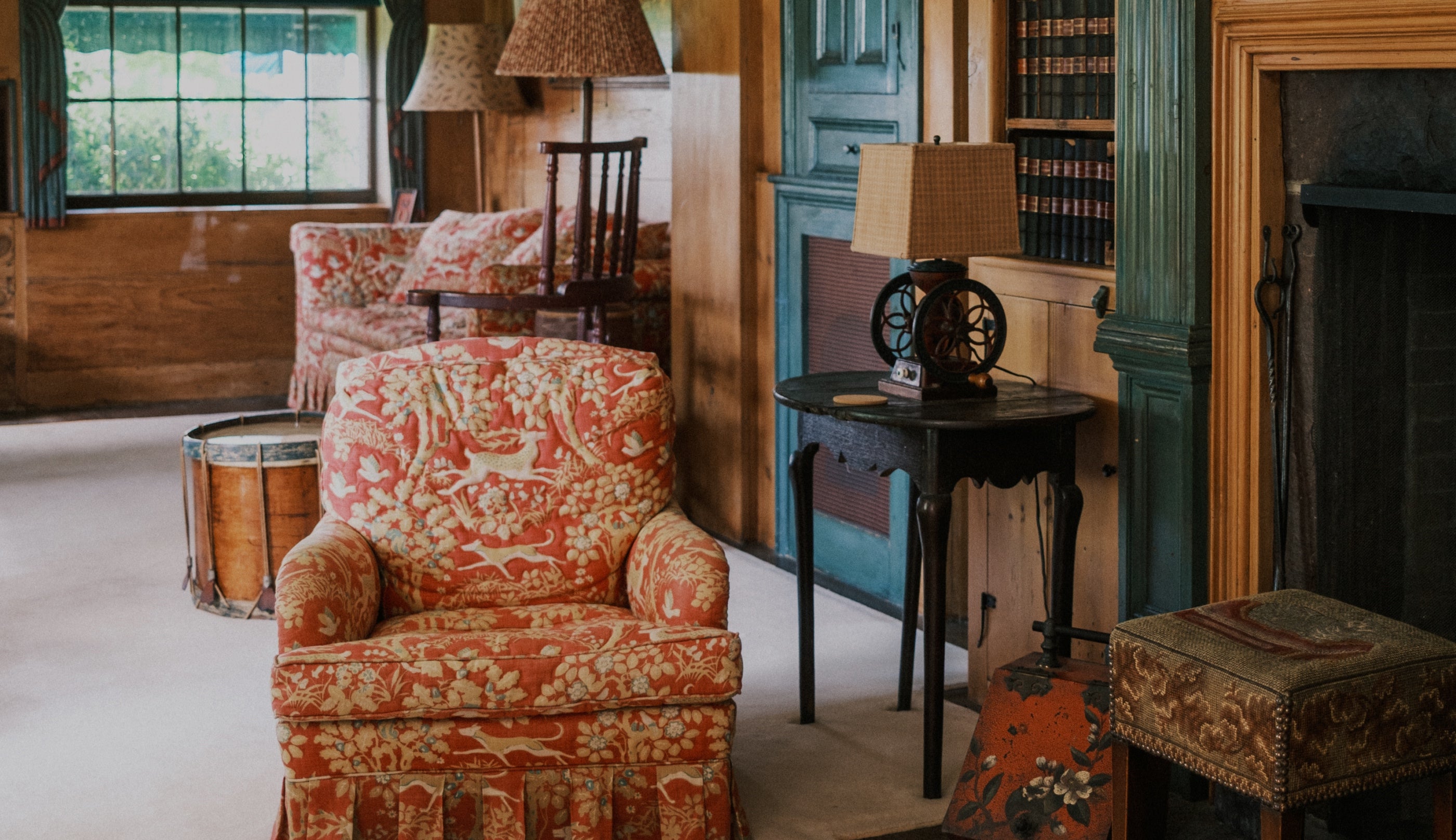
The authentic and timeless world of Ralph Lauren
Fall 2026
RL/Culture

Americana Fever

How did a 19-year-old girl create one of America’s great museums in a hidden corner of Vermont?
By James Reginato
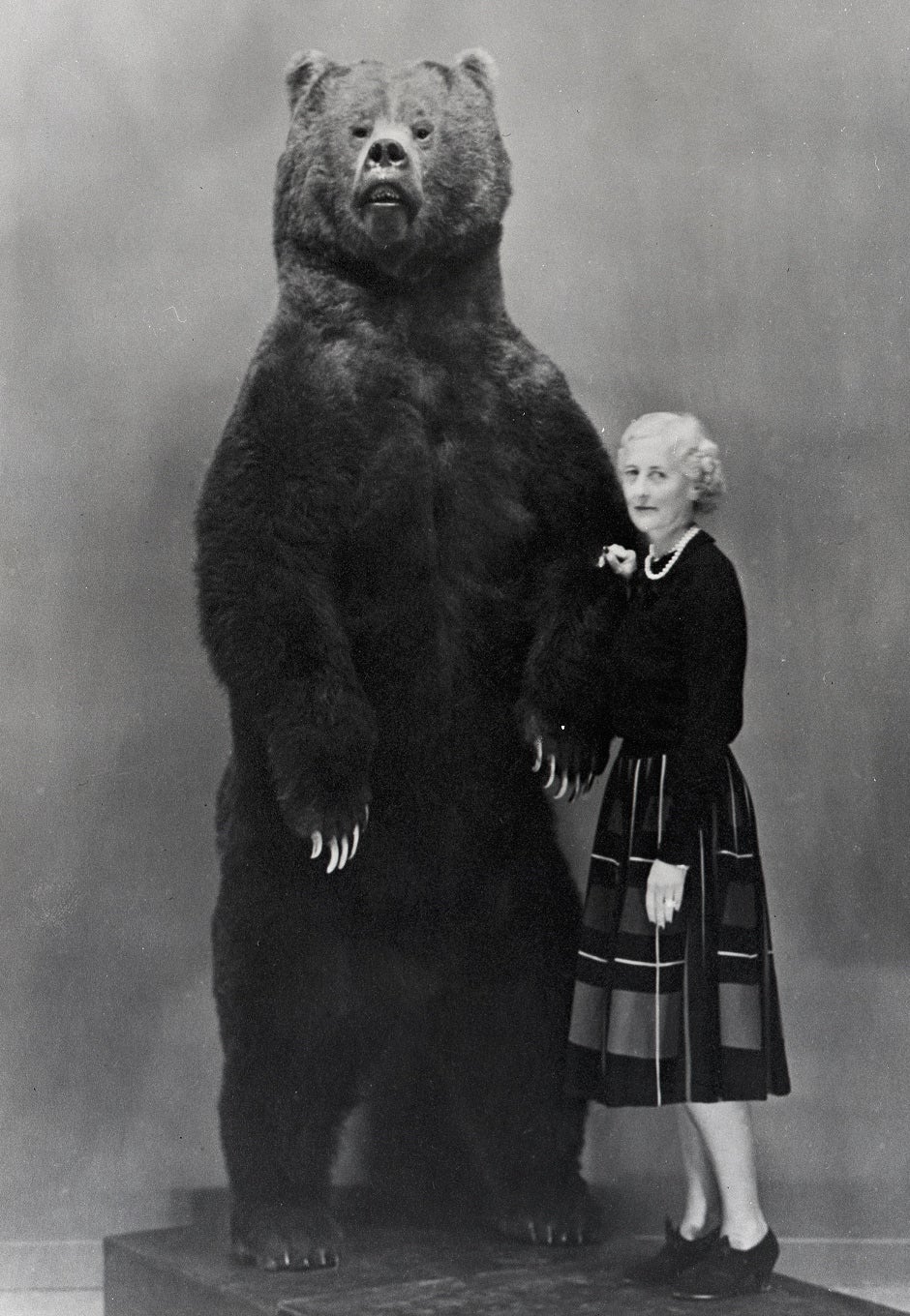
Photo: James L. Clark Studios, Inc., Collection of Shelburne Museum Archives. PS3.2-101.
Bear Necessity
Electra Havemeyer Webb in 1930 with a Kodiak bear.
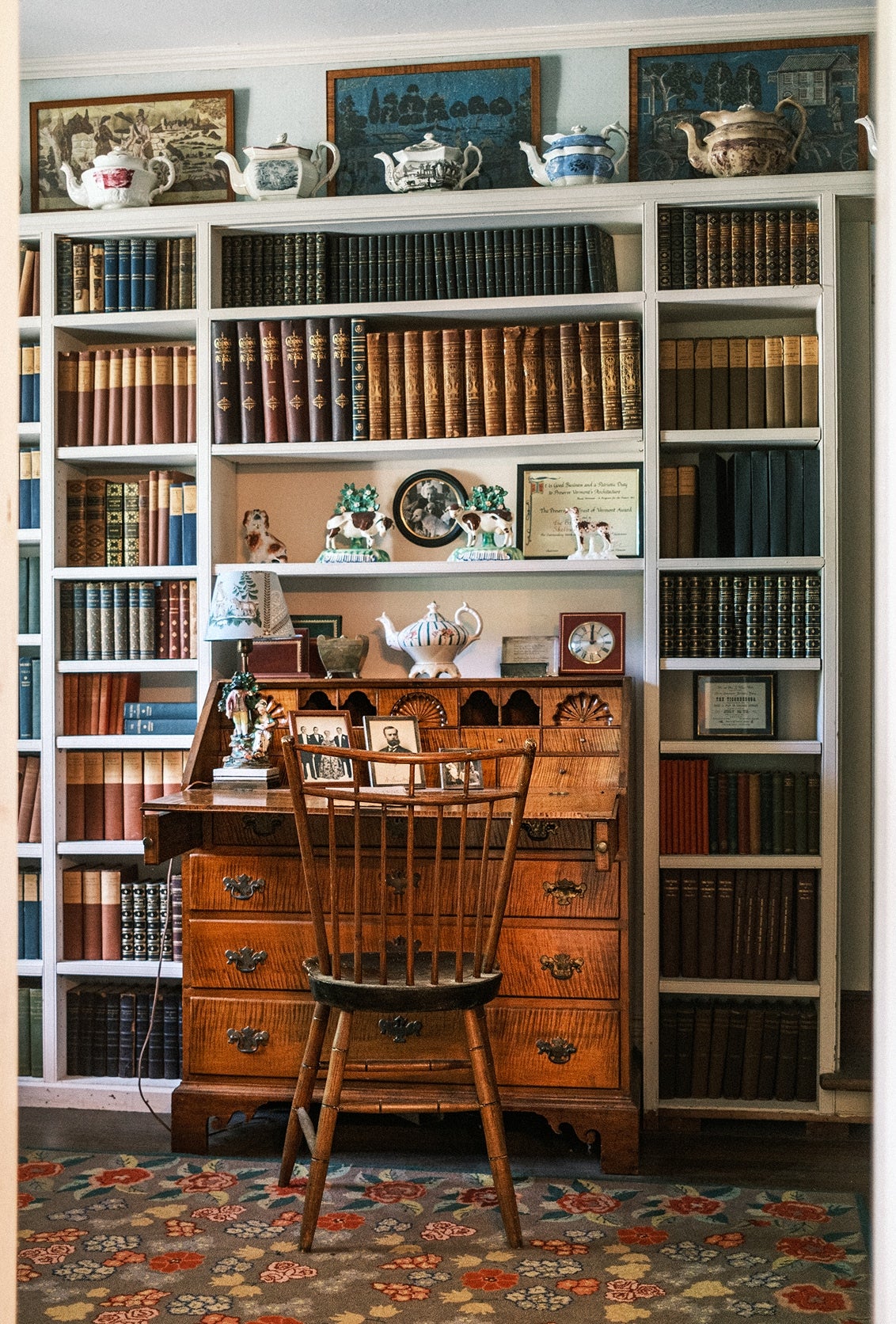
Whether she was surrounded by museum-quality works of art or deep in the great outdoors, Electra Havemeyer Webb was at home. The daughter of Gilded Age sugar baron Henry O. Havemeyer and his formidable wife, Louisine, Electra was born in 1888 and grew up in a turreted mansion on Fifth Avenue filled with masterpieces by Cezanne, Manet, Degas, Corot, Rembrandt, El Greco, and the like. While still a youngster, she accompanied her parents on long voyages to Europe to hunt for art. Electra pulled her weight. In Paris, at age 7, Mary Cassatt painted her portrait. One day while still a teenager, as she was riding through the Connecticut countryside, Electra’s eye took her in a very different direction. Glimpsing a figurative carving of a Native American girl outside a general store, she stopped in her tracks and purchased it for $15. When this sculpture was delivered to the family home, which had been decorated by Louis Comfort Tiffany, her mother did not know what to make of it. “What have you done?” she asked. “I bought a work of art,” Electra replied. The sculpture would spark the beginning of a lifelong quest. Attracted to the simple beauty of everyday objects made by American craftsmen, Electra spent the rest of her life buying quilts, weathervanes, decoys, and other vernacular items. A pioneer, she became one of the first serious collectors of folk art and Americana. Mortified, Louisine continued to vent: “How can you, Electra, you have been brought up with Rembrandts and Manets, live with such American trash?” Fortunately, Electra found a kindred spirit in Vermont-born James Watson Webb, whom she married in 1910, at age 22. A handsome medical-school graduate with a love of the outdoors, he was an heir to another great American fortune through his mother, Lila, a granddaughter of Commodore Cornelius Vanderbilt. Much as Electra went against the grain of her family, Lila had done the same three decades earlier, when she married William Webb, a diplomat’s son. While her brothers Cornelius II and William swanned around Newport, where they built its two most palatial “cottages” (The Breakers and Marble House), Lila struck out on an entirely different path, to the northern reaches of rural Vermont. With her fortune, she and William acquired 4,000 majestic acres—an enchanted kingdom on the shores of Lake Champlain with spectacular views of the Adirondacks and the peaks of the Green Mountains. To bring order to the expanse, they hired Frederick Law Olmsted, the father of American landscape architecture; he crafted a plan to divide the sweeping property into three parts—farm, forest, and parkland.
Attracted to the simple beauty of everyday objects made by American craftsmen, Electra became one of the first serious collectors of folk art and Americana.
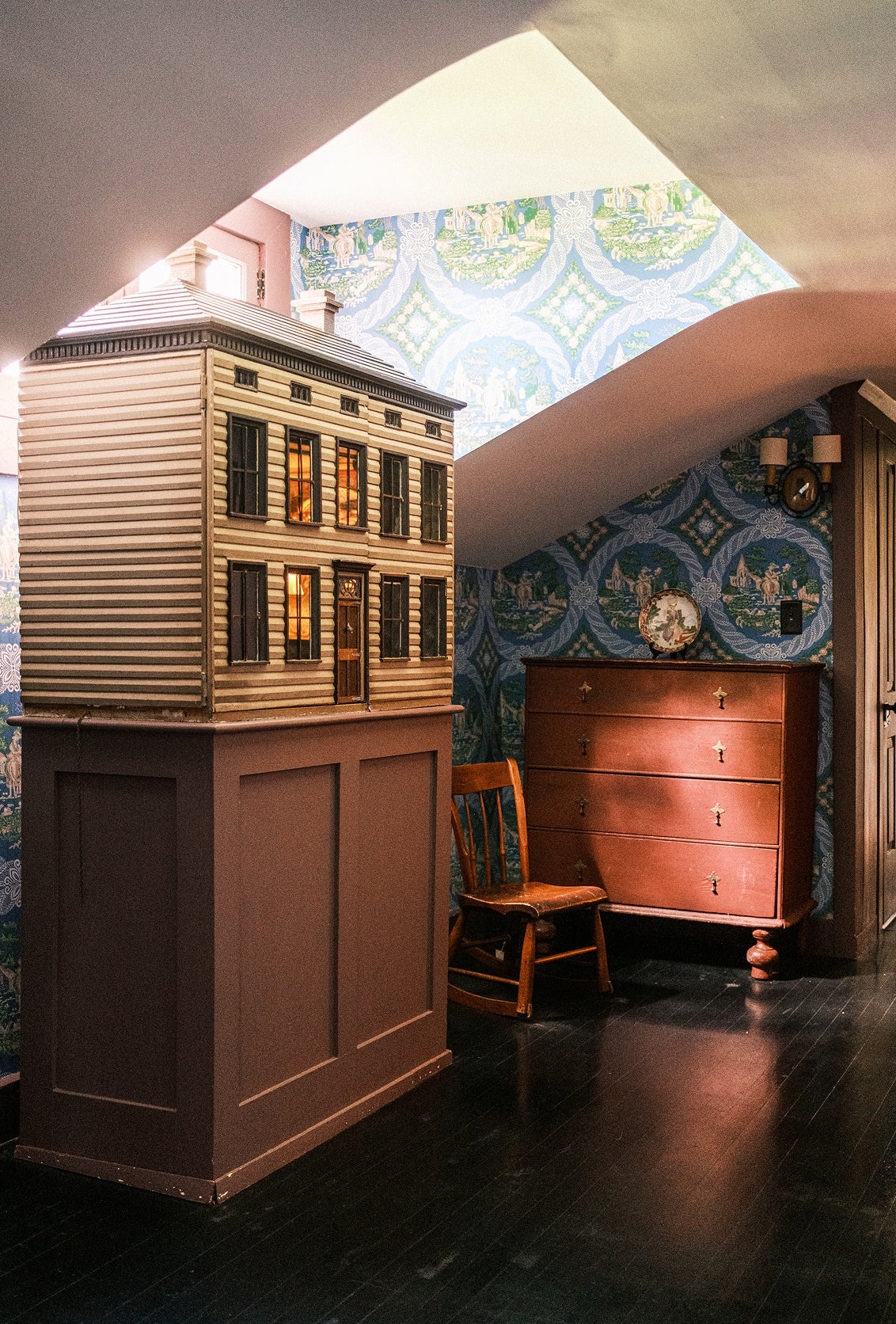
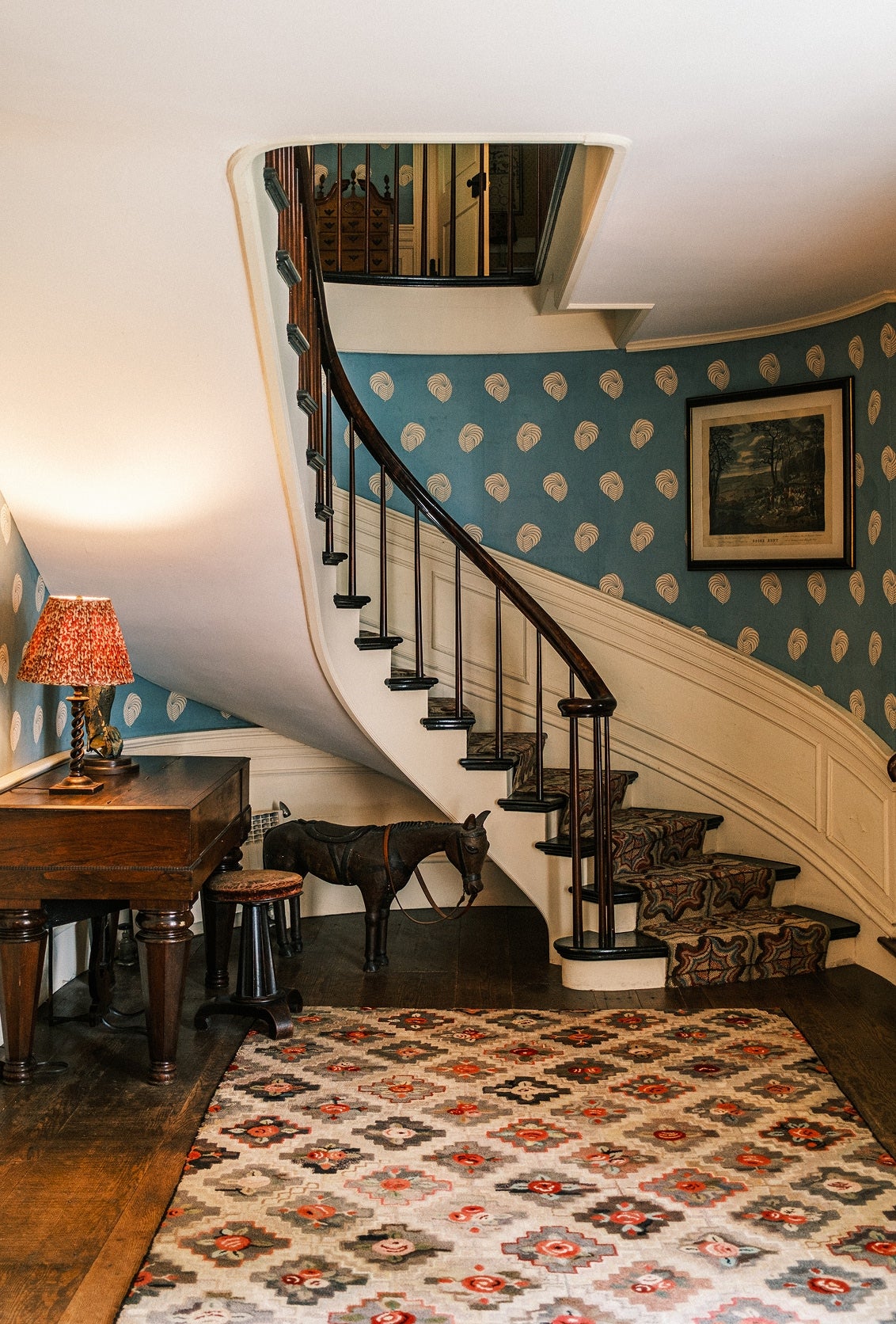
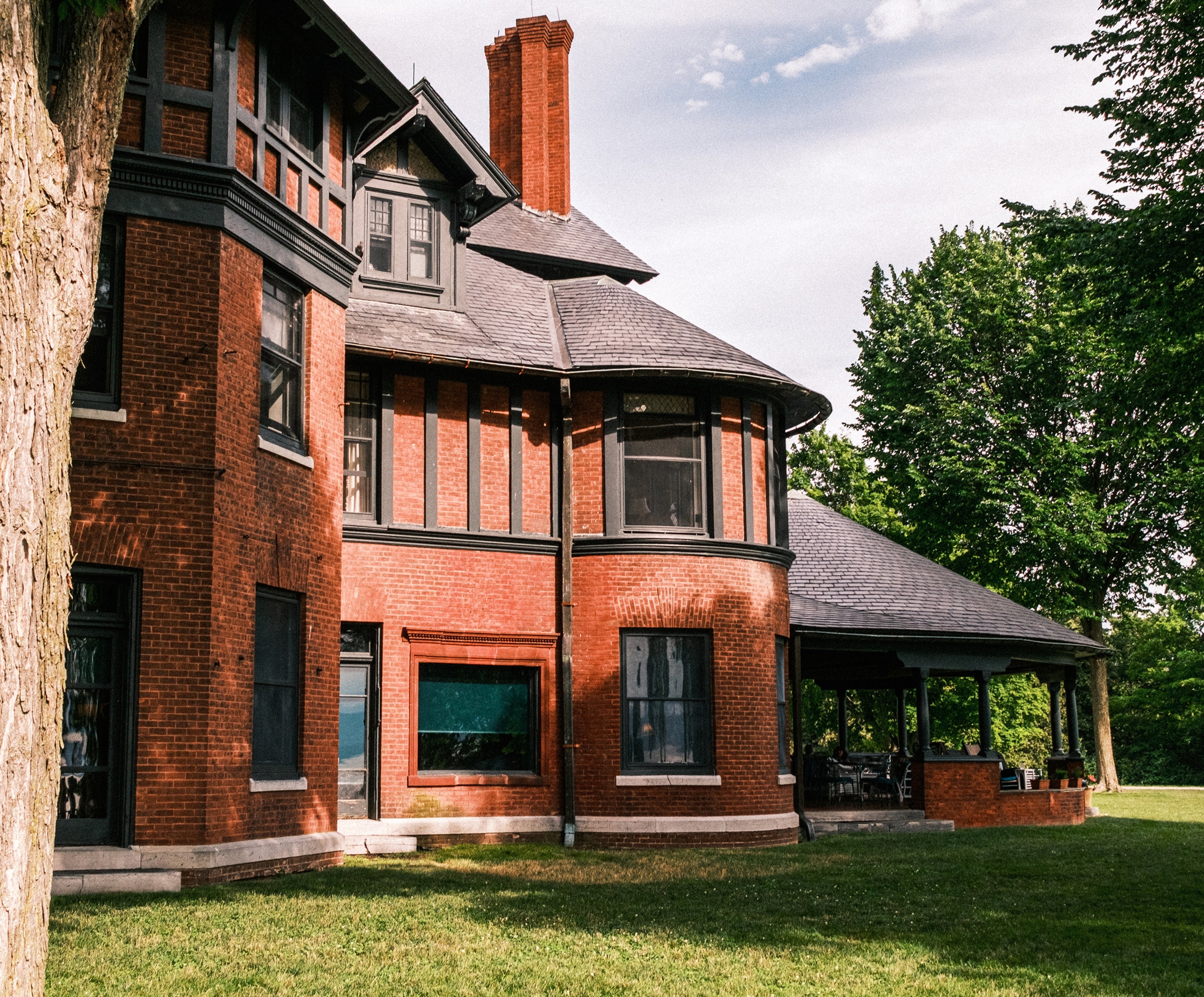
The family’s domestic life revolved around “the big house,” a sprawling Queen Anne–style mansion built in 1887, which was surrounded by lush gardens that spilled down from the lawns to the lake. Its 24 bedrooms were often filled with guests, including presidents Theodore Roosevelt and William Taft. Shelburne Farms, as the property was called, became one of America’s greatest sporting and agricultural estates. Along with its vast barns and stables, innovative farm practices were pioneered. After her marriage, Electra became smitten with this world. “I felt as though I was in dreamland,” she said. As a wedding present, she and James were deeded 1,000 acres. On its meadowland, they found a charming but dilapidated pink-hued Colonial Revival style cottage built in the 1840s. In time, they restored and expanded it to encompass 40 rooms. Known as “the Brick House,” it became a retreat for the couple and their five children when they weren’t at their penthouse at 740 Park Avenue in Manhattan or their estate at Westbury, Long Island. In the early years, they stayed in Vermont only from mid-October through November—the fox-hunting season. In other months, it was off to Alaska for moose hunting or Scotland for grouse shooting. As time passed, Vermont became the creative center of Electra’s life. After World War II, she grew anxious as she saw New England’s heritage slipping away. She became a dedicated preservationist, rescuing whole buildings and other structures from across the state, and transporting them to Shelburne, including a 168-foot-long covered bridge, a 900-ton steamboat, a lighthouse built in 1871, as well as numerous historic houses. Some of these buildings would eventually showcase Mrs. Webb’s ever-growing collections of handmade objects that had been part of American life for generations–furniture, pottery, pewter and glassware, firearms, dolls, tools, shop signs, and much more.
In her view, these historic items were masterpieces of self-expression. To preserve and showcase them, she conceived of a new type of museum, which she described as “a collection of collections” as well as “an educational project, varied and alive.” Sprawling over 45 acres, the Shelburne Museum features some 39 structures, including many that she had saved and relocated. When it opened to the public in 1952, it was one of the first institutions to exhibit folk art in a museum setting. Electra and James died within a few months of each other, in 1960, but their vision endures. With more than 100,000 objects, the Shelburne Museum is recognized as one of America’s great collections of folk art. And, thanks to a nonprofit formed in 1972 by fourth-generation Webb siblings, Shelburne Farms welcomes the public to tour its operations and learn about its sustainable practices. Most pleasantly, the “big house” has become one of one of New England’s most enchanting summer hotels. With 24 bedrooms and farm-to-table dining, the Shelburne Farms Inn operates from May through October.

James Reginato, a writer-at-large for Vanity Fair, is the author of books including Growing Up Getty: The Story of America’s Most Unconventional Dynasty.