The authentic and timeless world of Ralph Lauren
Fall 2026
RL/Culture

On Frozen Pond

In search of wild ice.
By Nick Paumgarten
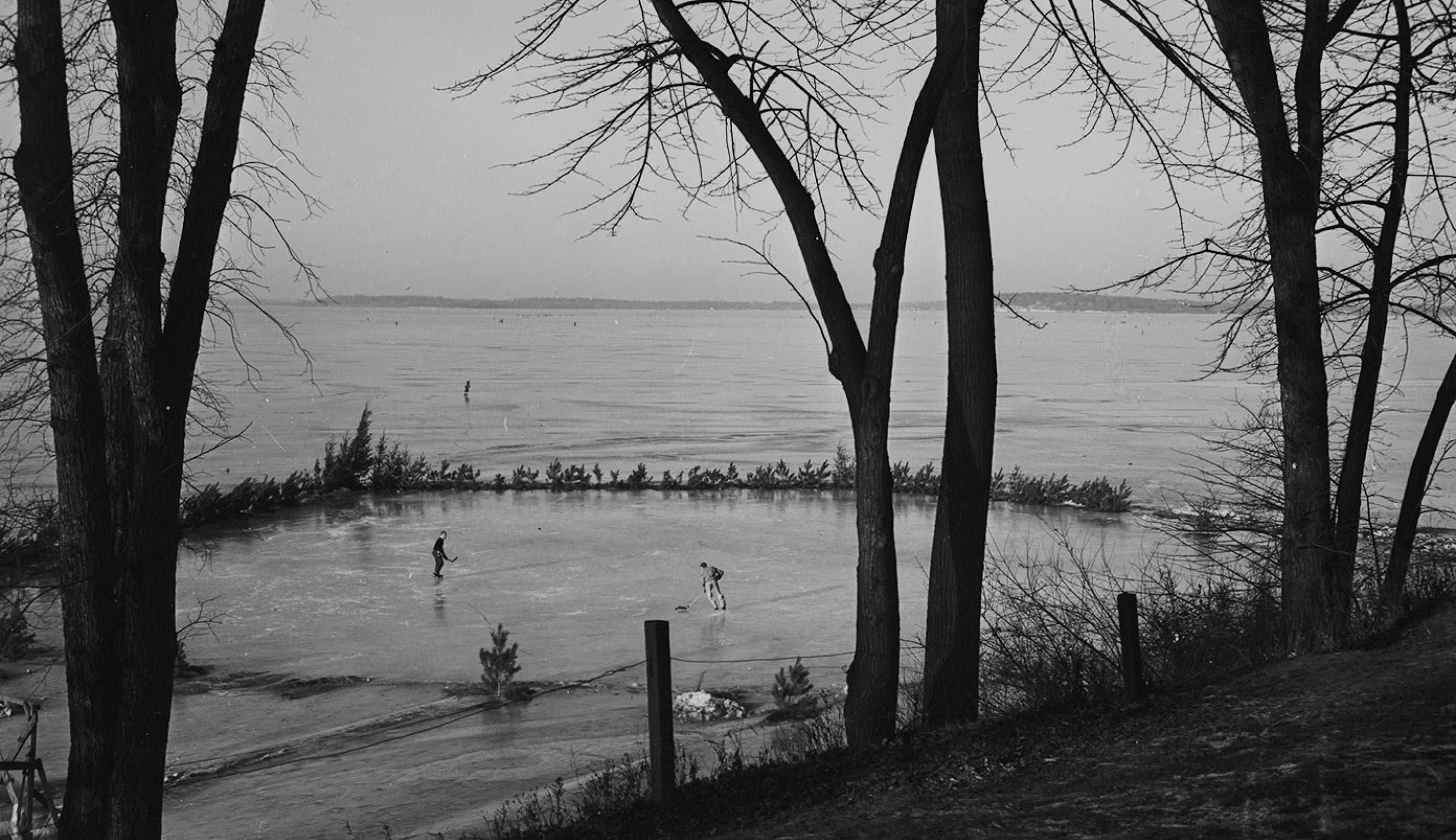
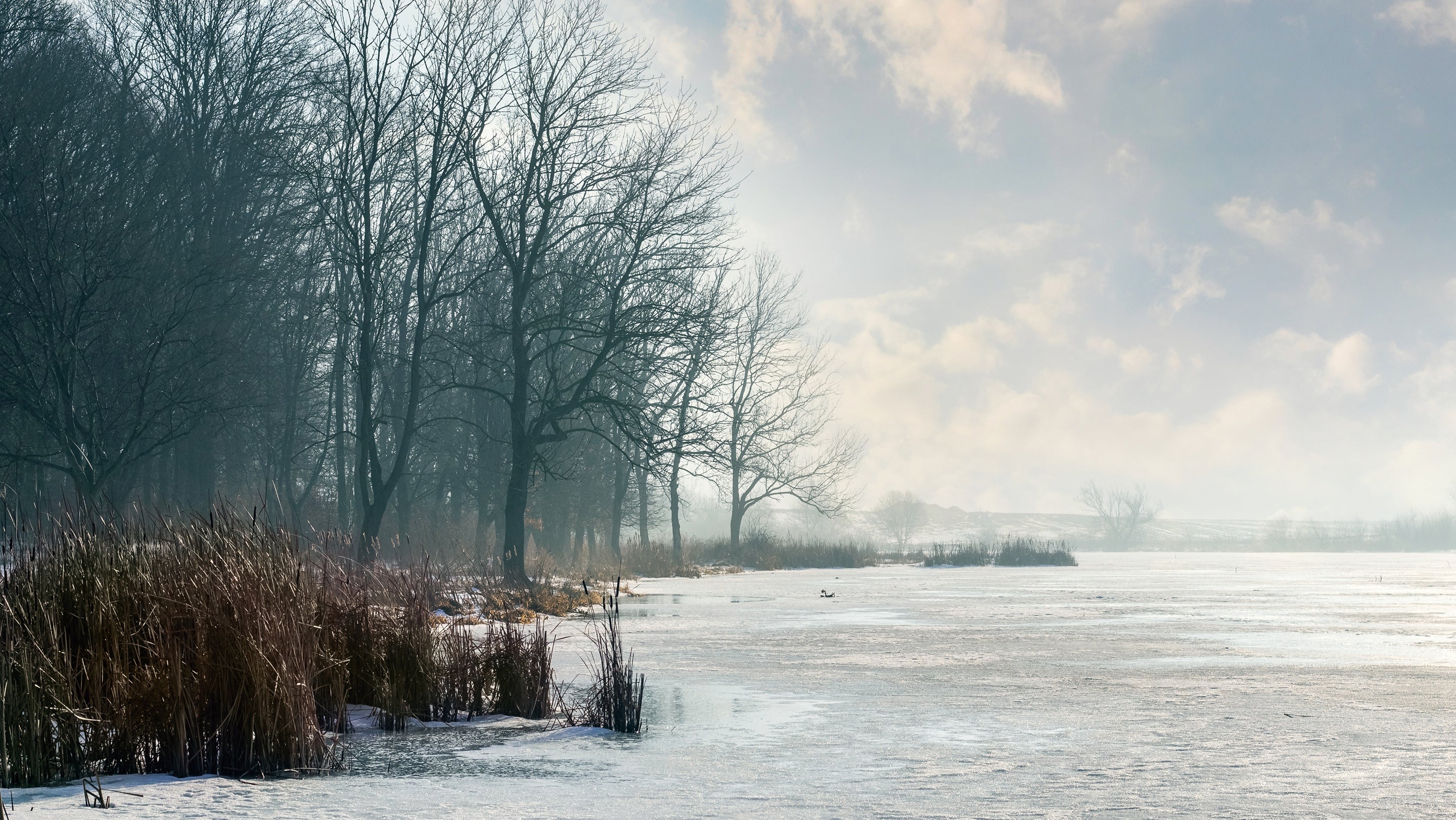
Look here: a run of snowless days, daytime temps well below freezing. The network of urban pond-hockey lunatics lights up. We savor the cold snaps. We pass around each pitiless forecast with mounting excitement, as everyone else shudders and complains. I have been chasing wild ice for almost five decades. By wild ice, I mean natural ice, bodies of water frozen by the elements. A lot of things have to go right for it to be agreeable, not to mention safe. The conditions are fickle, the alignment of circumstances rare—and ever rarer, as the climate shifts. Even when the cold holds, and the snow holds off, and you get a clean sheet, it never lasts. Its evanescence is the key to its allure. You get to know which weather, and how much of it, brings thick enough ice to which bodies of water. Marshes, ponds, lakes, rivers, reservoirs. For a time, we liked to frequent an abandoned airport in Queens, its derelict runways and hangers an industrial swamp which, frozen over, became a post-apocalyptic playground. We changed into our skates on a rusting gutted-out fuel truck up to its wheel wells in ice. With my fellow enthusiasts, I’ve cross-country skied deep into the High Peaks of the Adirondacks with skates on my back in search of virgin bogs. I’ve ducked through the phragmites near Kearny, New Jersey, to poke around in the gritty chocolate-brown brackery of the Meadowlands. I spent a weekend exploring the length of Lake Carnegie, in Princeton, and another playing shinny nearby on the pond at the Institute for Advance Study where Cillian Murphy, in Oppenheimer, has his fateful encounter with Einstein. Last winter I made sure to be the first to poach the Harlem Meer, in Central Park, under a rising full moon. After a while, a squad car rolled up, and I trotted off into the North Woods, confident that no cop in a heated cruiser would give chase on foot. For days afterward, I eyed the Reservoir, where the ice was uncommonly clean and almost certainly thick enough to support me, or even a city bus. Wouldn’t that be a prize. But I chickened out. I was too old for jail.
I spent a weekend exploring the length of Lake Carnegie, in Princeton, and another playing shinny nearby on the pond at the Institute for Advanced Study where Cillian Murphy, in Oppenheimer, has his fateful encounter with Einstein.
Polar Vortex. The keenest of us all, our man Ben, sent out the bat signal: His stretch of the Hudson River, down the hill from his house in Piermont, New York, just south of the Tappan Zee Bridge, had frozen solid and clean. This hadn’t happened in a generation. It called to mind an earlier time, the Rockland County reveries and seasonal recurrences of James Salter, in Light Years. Ice yachting, the harvesting of ice blocks, horse-drawn sleighs. We city boys mustered at first light and arrived as the sun rose over the far shore. This was a broad section of the river, where it bellied out and formed, on the western side, a kind of shallow bay. You could see barges and tugs navigating in open water in the main channel, a mile or so out, but where we were the ice had set up solid. There was still a tide up here, and it had formed candied bergs and slabs that made it tricky for us, in our street shoes, to pick our way out to where the surface was smooth, a mirror that flattered the dawn. We sat on our bags and laced up our skates, fingers clumsy with cold. The first strides always feel perilous, awkward, and stiff, but once the blood is flowing and you get a hang of the edges and the texture of the ice, you can open it up. We all had sticks and hockey gloves but no pads or helmets, just wool hats known to our Canadian cousins as toques. We passed a couple pucks around, warming up the mitts. But the game could wait. Instead, we explored the outer edges of the supportable sheet, out toward deeper water, and beat our way upwind in the direction of the bridge, which turned out to be farther away than it looked. The thighs burned, the cheeks stung, the digits went numb. By now there were 10 of us. We made goals out of boots and tossed our sticks into a pile, and one of us sorted them into two piles. Teams. For the next two hours we played hockey. Shinny, as it is called. If there was any scorekeeping, I do not remember it, but I know that I wanted badly to score and to prevent the other team from scoring—to make nifty plays, thread passes through seams, and exalt my teammates. The intensity built until it leveled off, and then began to ebb, amid fatigue and bone-cold and a sense of having tried every move and run through the repertoire of possibilities. A few of us wandered off, tacking downriver this time, in the direction of a marina. We weaved in and out of the pilings. Here, for whatever reason, there were patches of open water, but the hockey endorphins brought on a sense of invincibility, new laws of physics revealed only to those who have defied the old ones without consequence. Days like this always ended with a suffusion of joy and utter exhaustion. In the car back to the city, heat cranking, then in the pub, over burgers and beers, toes still thawing, we felt as sated as we ever would again.

Nick Paumgarten is a staff writer at The New Yorker and the author of the memoir The Intangibles, which will be published this November.